
Debate about property costs often focuses on rent. For occupiers, however, the total bill matters — including operating and energy costs. For owners, asset managers and property managers, analysing these additional charges belongs in portfolio management alongside rental income. The key questions are which costs arise, what influences them and who pays them.
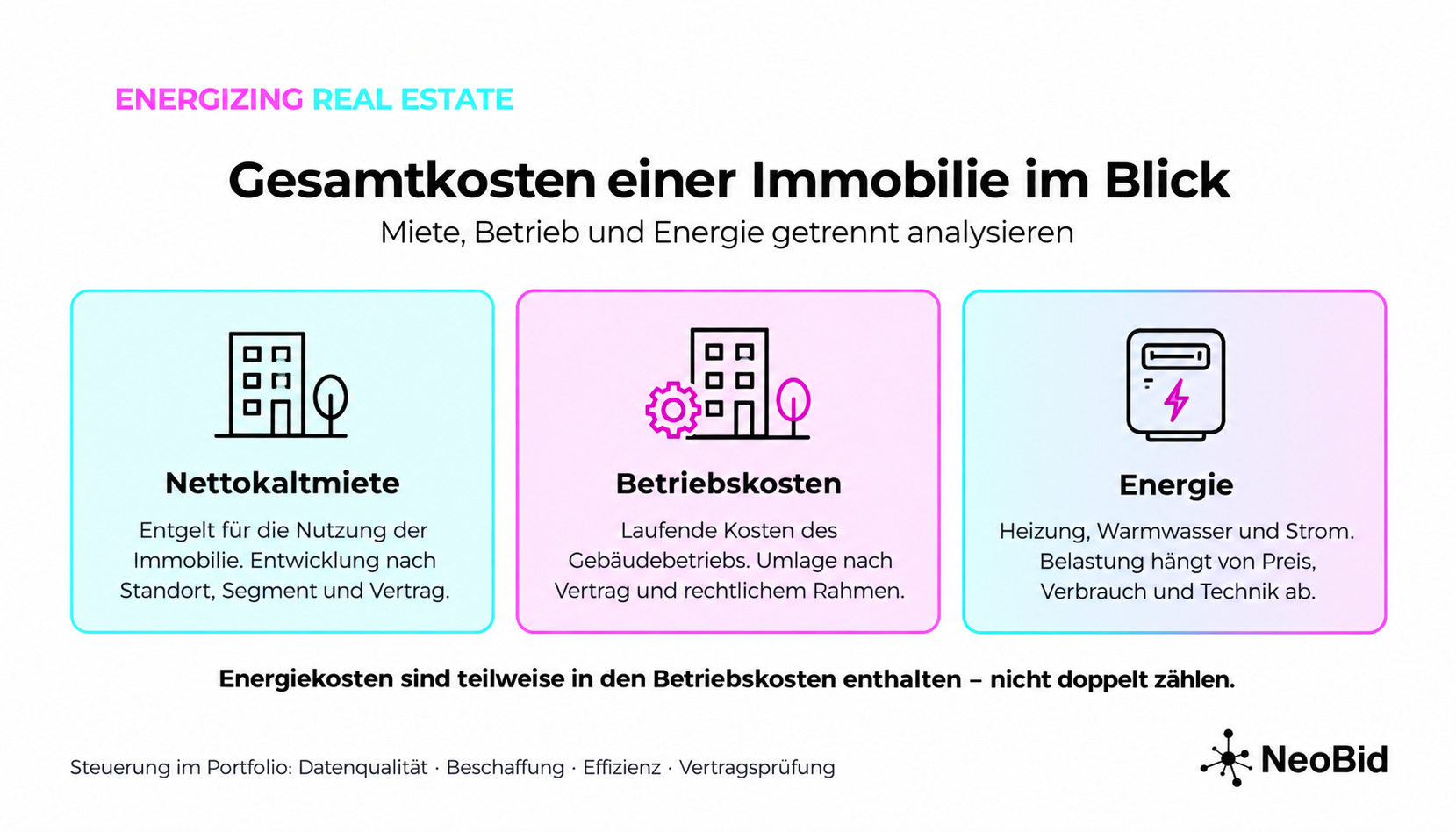
Distinguish rent, operating costs and energy
A comprehensive assessment requires clear definitions. Net rent is payment for using the property. Ongoing building operating costs and, where applicable, separately billed energy supplies are additional. Heating and hot water costs may already be included in operating costs and must not be counted twice.
For residential tenancies, section 556 BGB regulates agreement and billing of operating costs. Recovering costs from tenants is not an unconditional right to pass on every expense. The German Operating Costs Ordinance distinguishes ongoing operating costs from administration, maintenance and repair costs, among others. For commercial leases, the specific agreements and applicable legal framework must be reviewed separately.
Assess cost trends by period and segment
Rents, non-heating operating costs and energy prices do not necessarily move together. Which item changes the total burden most depends on the period, building and contract. Residential averages cannot simply be applied to commercial portfolios or individual locations.
Energy prices do not rise faster than rents in every period either. For example, Destatis reported for January 2026 lower household energy prices and higher net rents compared with the same month a year earlier. Long-term conclusions therefore require comparable data series, clear cost definitions and a consistent observation period.
For occupiers, total costs remain decisive. A moderate increase in base rent can coincide with a substantial rise in individual operating costs. Conversely, lower energy costs can partly offset other increases.
Which costs can be influenced within the portfolio
Energy prices, fees and regulation create external constraints. This does not mean service charges are largely beyond control. Procurement, consumption and building operations offer different opportunities:
Procurement and contracts: Make supply terms, durations and price components comparable. A structured energy procurement helps assess offers and risks.
Consumption and technology: Review settings, operating hours and efficiency measures against actual demand. Their impact depends on the building and its use.
Data and billing: Identify unusual consumption, missing allocations and deviations early. Reliable metering and consumption data provide the foundation.
Depending on contractual commitments, advance payments and billing periods, price changes affect occupier costs with a delay. Cost control should therefore cover both expenses already incurred and future commitments.
Treat operating costs as part of property strategy
Energy efficiency, technical quality and transparent operating cost management can support a property's usability and attractiveness. Their significance for letting and value development still depends on location, use, lease structure and market conditions.
For professional owners, this means considering rental income, occupier costs and their own non-recoverable costs together. A transparent cost structure makes it easier to prioritise measures and review their impact.
NeoBid helps analyse energy-related portfolio costs and assess procurement options. Existing contracts, consumption data and upcoming supply decisions provide a useful starting point.