
In the first quarter of 2026, the Middle East conflict significantly changed oil, gas and electricity markets. This review considers the price shock at the time and its significance for professional portfolio energy procurement.
Geopolitics as an oil price driver
The attacks on Iran on 28 February 2026 and subsequent disruption in the Strait of Hormuz put major energy transport routes under pressure. Damaged infrastructure, restricted shipping and limited alternative routes reduced available supply.
Brent oil traded well above US$100 per barrel at times in March. The IEA March 2026 Oil Market Report documents both the price jump and subsequent declines. Additional production capacity alone does not resolve transport bottlenecks; what matters is which volumes actually reach the market.
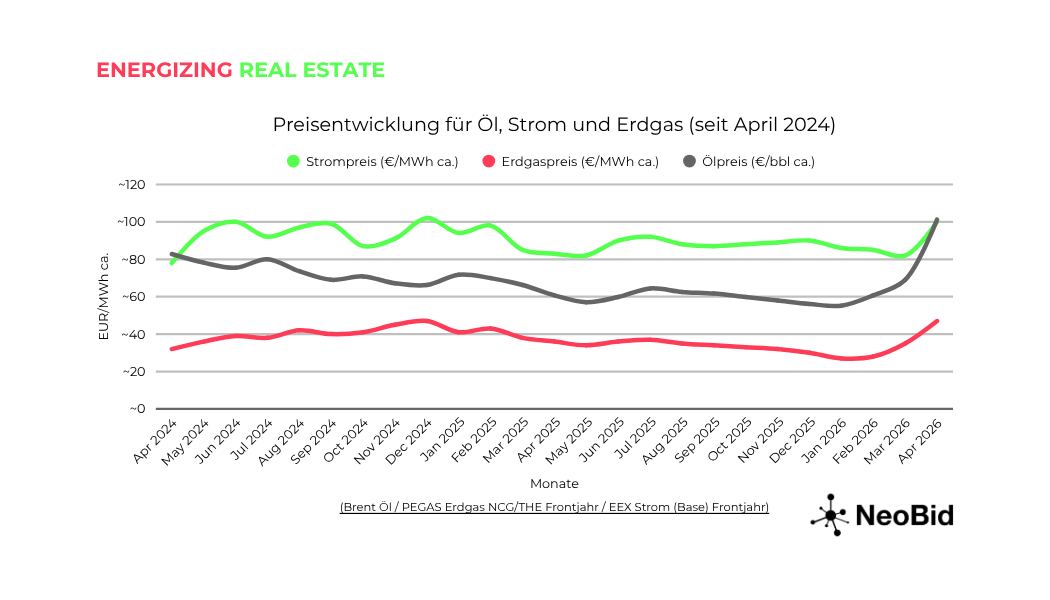
The original graphic shows approximate trends through April 2026. Electricity and gas are shown in €/MWh and oil, according to the legend, in €/barrel, so the series are not directly comparable. It does not replace a dated price series or current market quotation.
Gas market: LNG disruptions change the starting point
At the start of the year, growing LNG supply initially eased the gas market. Disruption in the Strait of Hormuz and damage to LNG infrastructure in Qatar abruptly changed that position in March.
The IEA Q2 2026 Gas Market Report confirms the sharp price rise and increased volatility. New facilities in North America and elsewhere offset some losses but did not remove uncertainty. Storage levels, pipeline supplies and weather remained additional factors.
Electricity market: distinguish spot and forward prices
Rising gas prices can make electricity more expensive when gas-fired plants are needed to meet demand and set the price. Carbon costs, renewable output and the availability of other generation, including French nuclear plants, also influence the outcome.
In March, price pressure was particularly evident in forward products for 2027 delivery. The Next Kraftwerke market review for March 2026 describes a baseload front-year high just below €100/MWh. At the same time, strong renewable generation temporarily dampened short-term electricity prices. Assuming gas and electricity prices always move together is therefore too simplistic.
What the outlook at the time actually said
At the beginning of the second quarter, attention focused on how long transport and production disruptions would last. This implied increased price risk, not a certain forecast of permanently rising prices. The later IEA gas report also documents declines in April.
The reporting date and delivery period are therefore essential when interpreting this historical article. A risk assessment from that time should not be used as a current purchasing recommendation.
Implications for property portfolios
Owners, asset managers and property managers should connect market movements with their actual procurement position:
Identify open volumes: Which supply points and delivery years are already price-secured, and which are not?
Check the contract model: When and to what extent do market prices affect your costs?
Prepare decisions: Define budget limits, tender deadlines and approvals before urgent pressure arises.
Assessing spot and fixed-price models and structured energy procurement for property portfolios help address these questions systematically.
NeoBid helps make open procurement volumes and contract terms transparent. This provides a basis for discussing next steps suited to your portfolio and risk requirements.