The commodity crisis in spring 2026 illustrates the close link between geopolitical supply disruptions and energy costs. For professional property portfolios, comparing individual offers is therefore insufficient. Owners, asset managers and property managers must align price risks, contract terms and procurement models with their financial and operational objectives.
Geopolitical tensions change energy flows
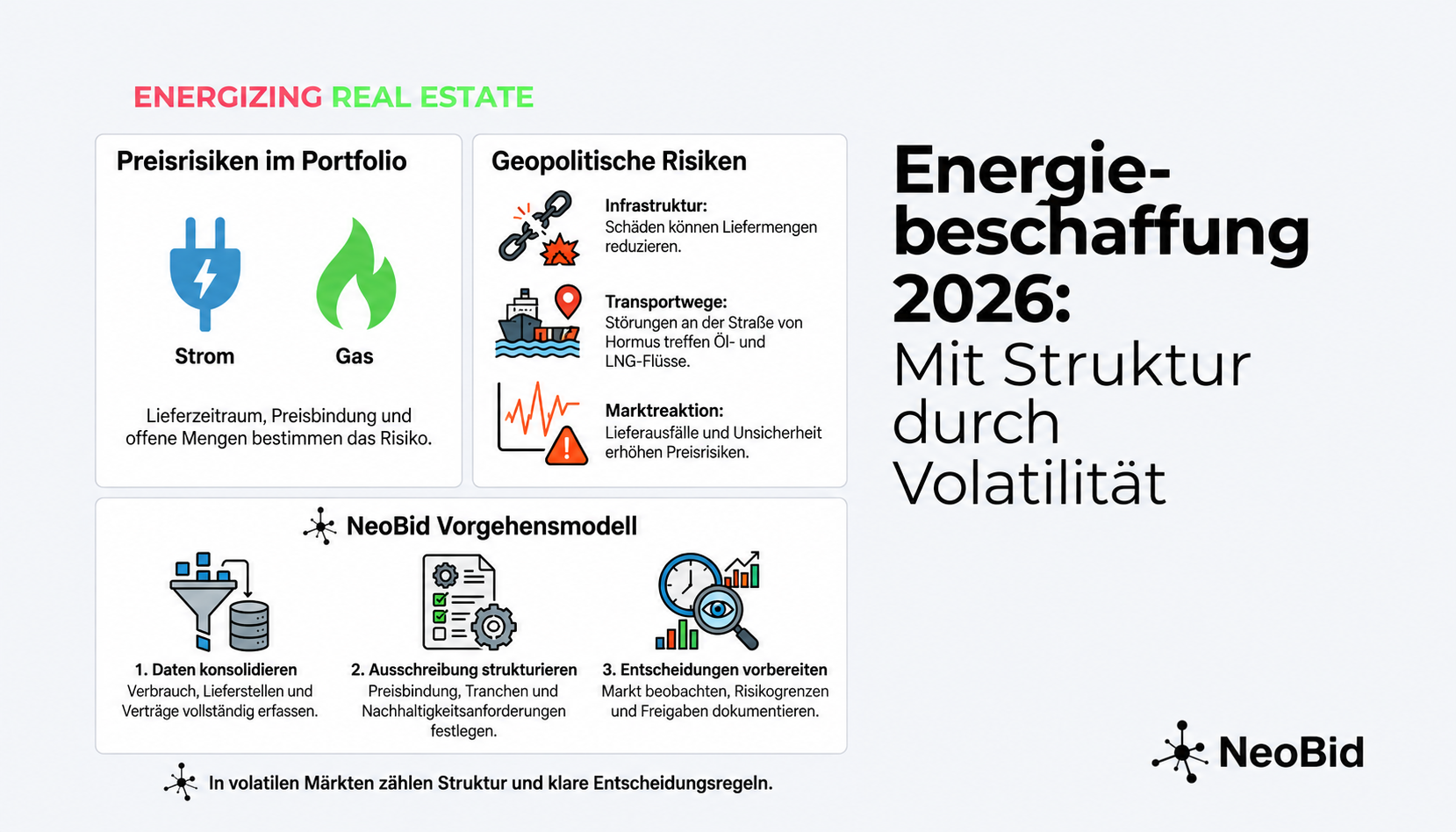
Attacks on energy infrastructure and disruptions at the Strait of Hormuz affected actual supply volumes as well as market expectations in March 2026. The IEA March 2026 Oil Market Report describes major interruptions to oil supply. The IEA gas market report for the second quarter also documents LNG supply losses and a strong gas price response.
LNG plays a larger role in Europe following the decline in Russian pipeline gas deliveries. Additional sources have diversified supply. At the same time, Europe remains exposed to international supply chain and transport risks and competition for available LNG volumes. Different supply regions can spread risks but cannot eliminate them entirely.
What the crisis means for electricity and gas contracts
Supply losses and uncertainty over further disruption can intensify price movements and risk premiums. This makes purchasing harder to plan for property owners and commercial occupiers. The impact on an individual portfolio depends on which volumes are already contracted and how prices are determined contractually.
A fixed price provides planning certainty for agreed price components but limits participation in subsequent price declines. High spot exposure allows that participation while increasing exposure to short-term price spikes. The balance between spot and fixed-price procurement should therefore start with budget objectives and risk-bearing capacity.
Connect procurement to portfolio objectives
A robust strategy connects energy purchasing with liquidity planning, contractual deadlines and expected consumption. It defines who decides on hedging and which risks are accepted. Market monitoring supports this process; it cannot reliably identify the cheapest purchasing moment.
Plan across the portfolio: Consolidate supply points, consumption data and contract end dates to assess aggregation opportunities.
Spread purchasing dates: Tranches can reduce dependence on a single contracting date. They do not guarantee a lower total price.
Limit price risks: Document and regularly review open volumes, budget limits and approvals.
Integrate sustainability requirements: Include renewable energy and required evidence in the tender; assess price, volume and contractual risks separately.
What structured tenders deliver
NeoBid supports energy procurement for property portfolios through market analysis, structured tenders and transparent offer comparisons. Complete data and consistent requirements show how offers differ in price fixing, duration and other contractual terms.
This supports transparent decisions and cost control. Greater planning certainty arises where the chosen procurement model fits risk-bearing capacity. Lower costs, competitive advantages or higher property values do not follow automatically: building characteristics, leases and market conditions remain important.
Prepare the next procurement decision
Experience from the commodity crisis supports procurement with clear responsibilities and verifiable decision information. The focus is on volumes still open, upcoming contractual deadlines and a procurement model aligned with portfolio strategy.
NeoBid can review this position with you and prepare the next steps of a structured tender.