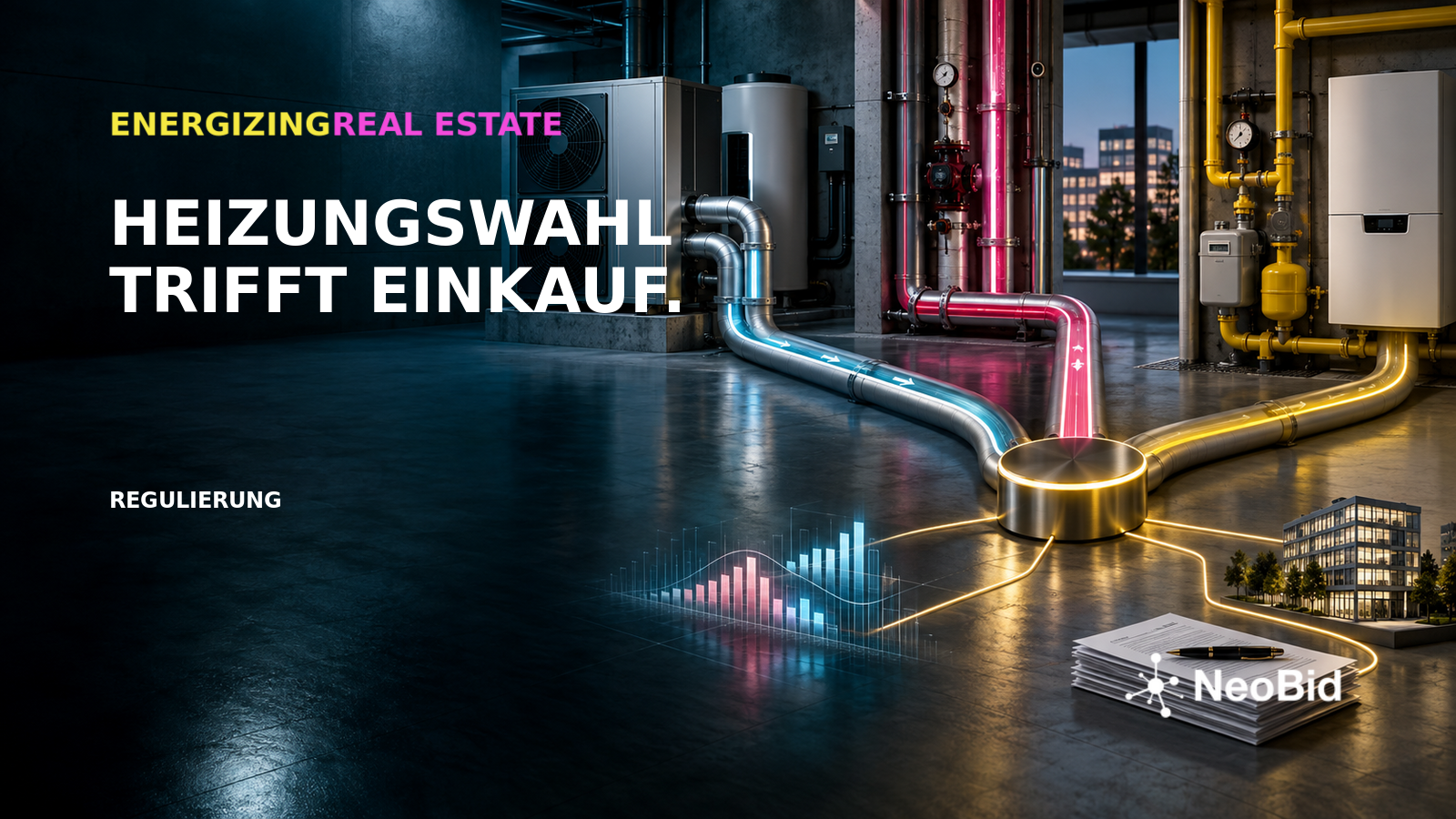
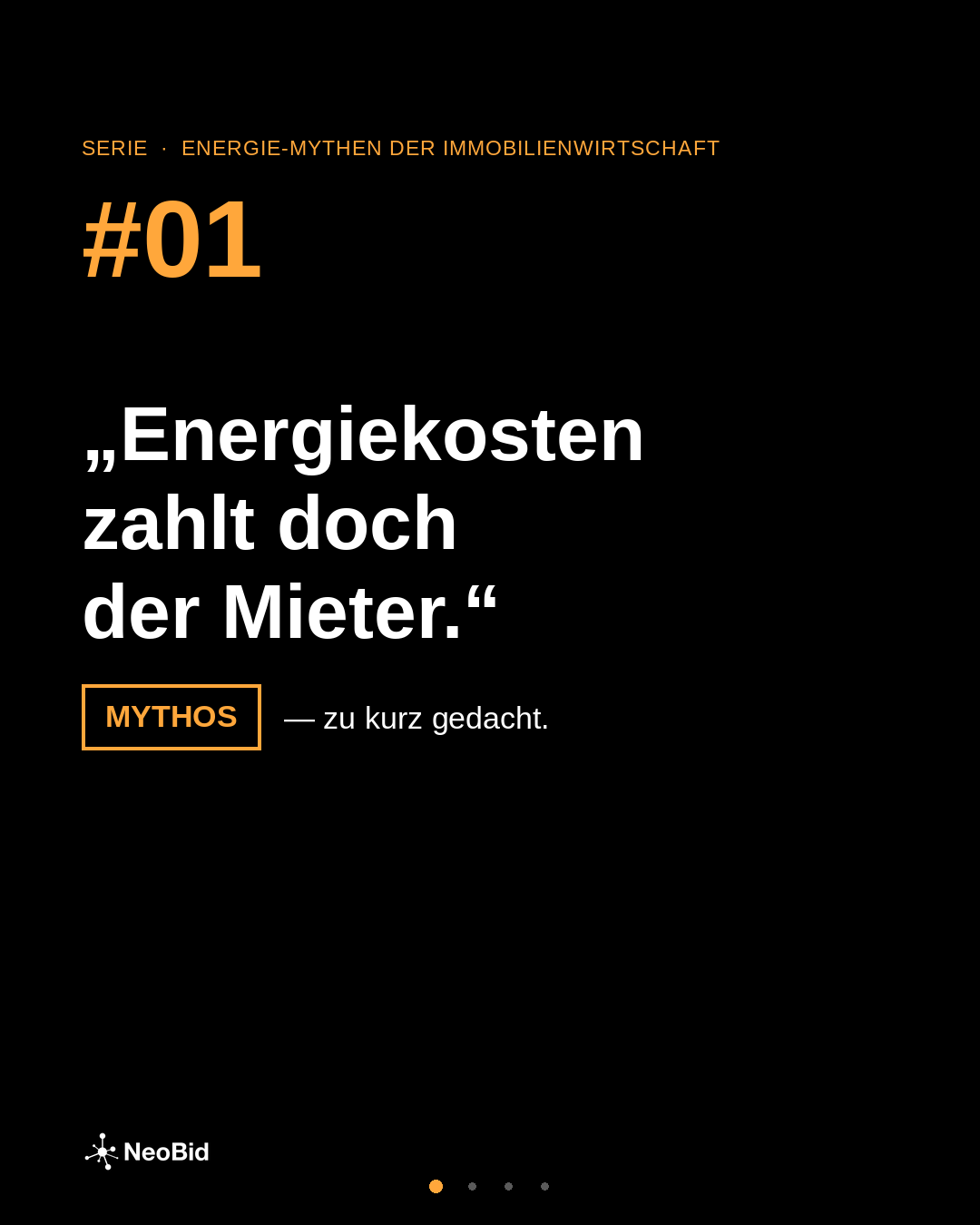
“The tenant pays the energy costs anyway.” For professional property portfolios, that assumption is too narrow. Recoverable costs may be passed on, but vacancy, owners’ own cost shares, CO₂ costs and tenants’ total burden remain relevant to owners, asset managers and property managers.
This article launches our “Energy myths in real estate” series, questioning common assumptions and putting them into context using market knowledge.
Assess energy costs within operating costs
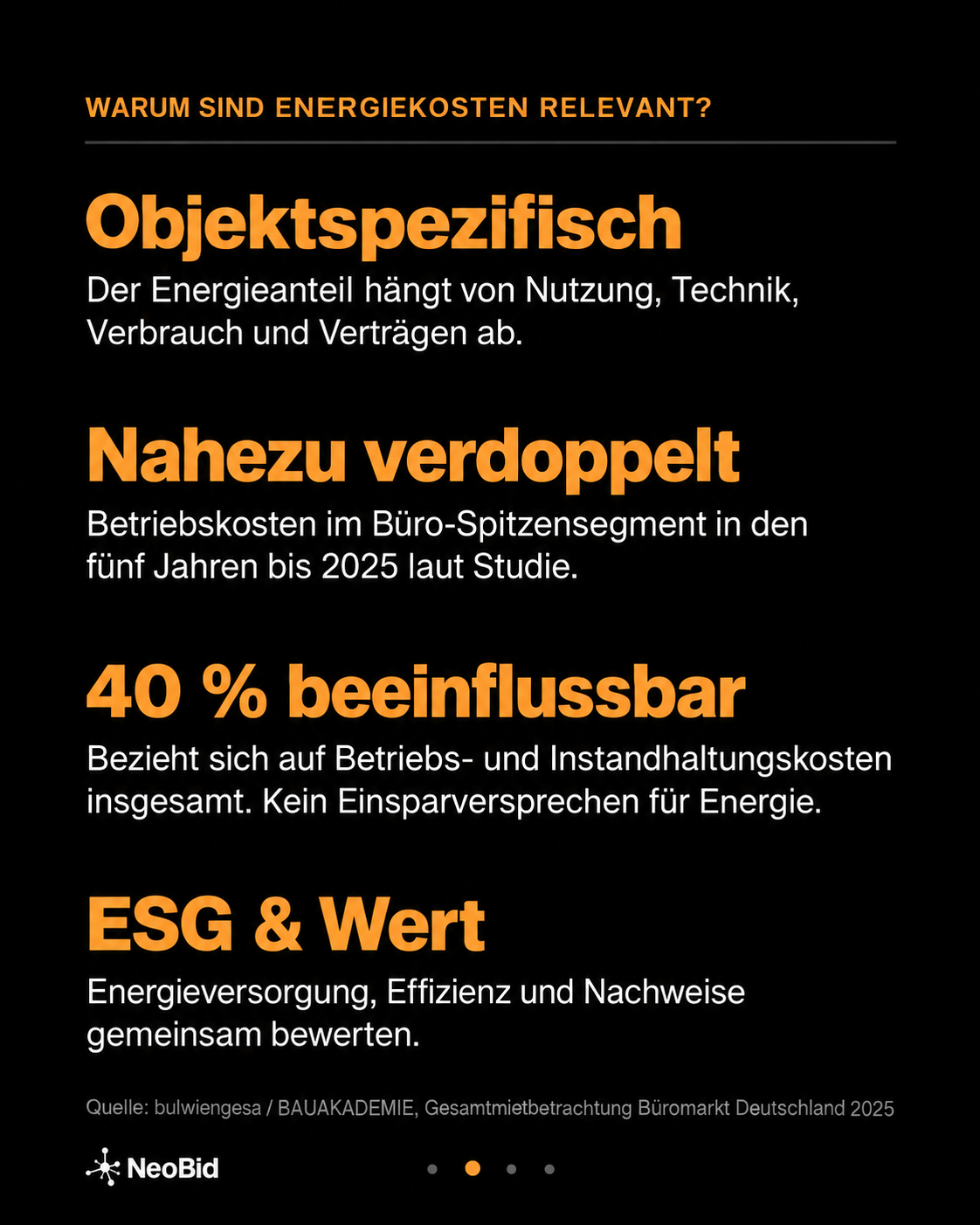
How strongly electricity and heating affect operating costs depends on use, building systems, consumption and supply contracts. Portfolio management therefore needs each property’s actual cost structure.
The study “Total Rental Cost Analysis: German Office Market 2025” by bulwiengesa and BAUAKADEMIE describes operating costs in the prime segment almost doubling in the five years to 2025. The approximately 40% of controllable costs cited refers to total operating and maintenance costs. It is neither an energy share nor a promised savings potential.
Structured purchasing, competition and consumption optimisation affect different factors. Their contributions should be measured separately: a lower supply price does not automatically reduce consumption, and lower consumption does not replace checking contract terms.
Why passing on costs does not fully relieve owners
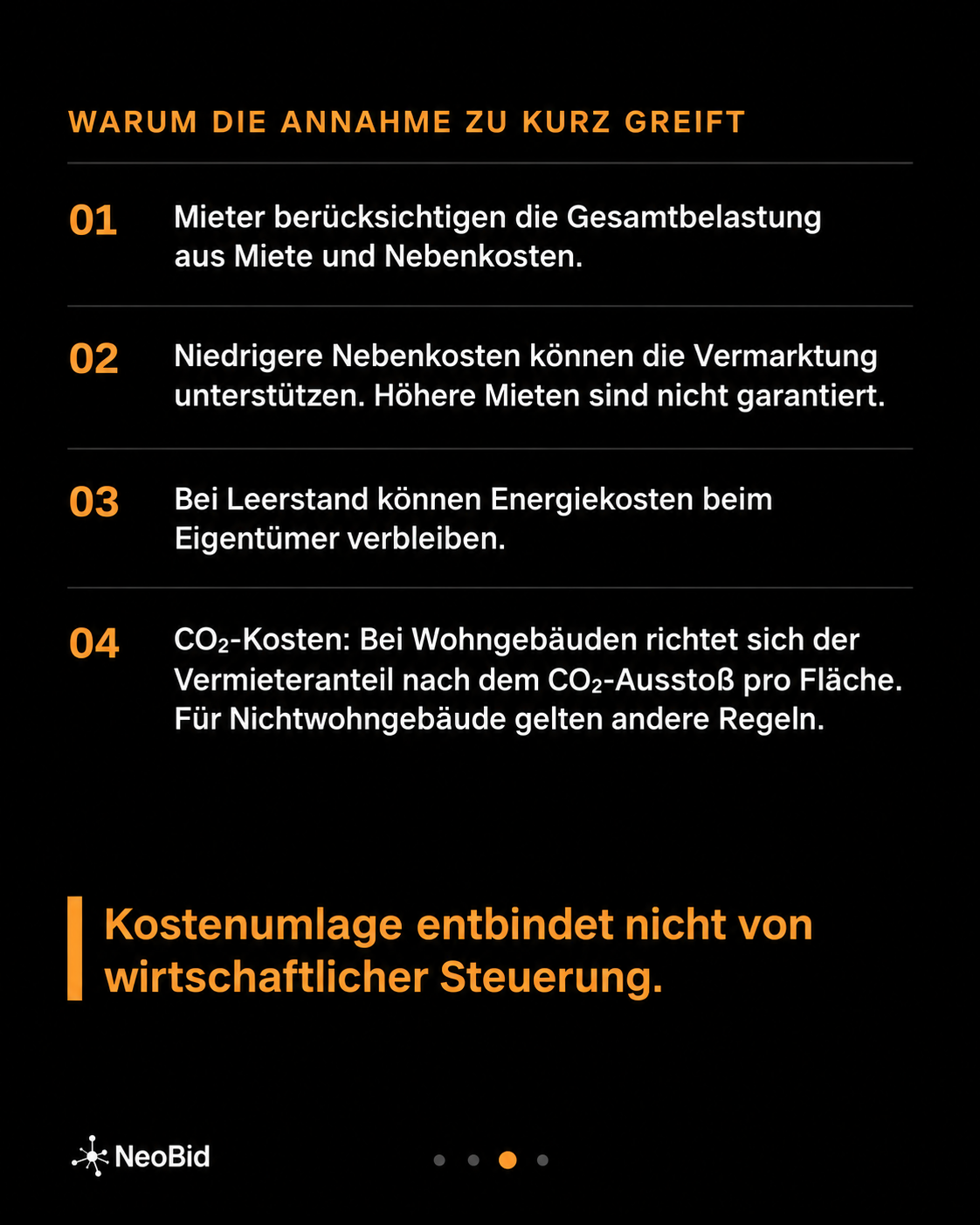
Total rental burden: Tenants consider service charges alongside base rent. Lower energy costs may support marketing, but do not automatically lead to higher base rents or faster letting.
Vacancy: Unused areas may still require energy, for example for frost protection or building operations. Costs that cannot be allocated for recovery under a lease remain with the owner.
Contractual and legal framework: Whether and how costs can be passed on depends on the valid agreement and applicable rules. For residential leases, section 556 of the German Civil Code (BGB) governs operating cost agreements and the principle of cost efficiency when settling advance payments.
Owners’ own cost shares: Non-recoverable costs and statutory landlord shares directly affect owner returns. Savings on fully passed-through costs do not automatically improve net operating income by the same amount.
CO₂ costs: distinguish residential and non-residential buildings
Heating supply within the scope of the German CO₂ Cost Allocation Act requires separate assessment. For residential buildings, allocation depends on annual CO₂ emissions per square metre of residential floor area. The statutory classification table provides for landlord shares of up to 95%. The energy certificate’s efficiency class is not the direct basis.
For non-residential buildings, section 8 of the CO₂ Cost Allocation Act generally limits the tenant share to no more than 50%. Scope and statutory exceptions must be considered in each case. These shares concern the covered CO₂ costs, not the entire energy bill.
Connect energy supply, sustainability and property value
Efficient operation and suitable energy supply can support a building’s competitiveness. Their effect on lettability, financing and market value also depends on location, building quality, market conditions and stakeholder requirements.
Green electricity or biomethane may form part of a supply concept. Their emissions impact and regulatory recognition depend on the product, evidence and applicable accounting or legal framework. Switching products alone neither replaces efficiency measures nor guarantees higher property value. The relationship between price, contracts, data and sustainability is explained in myth #2 on strategic energy procurement.
Conclusion: energy costs belong in portfolio management
Even where tenants bear part of the energy costs, cost recovery, vacancy, CO₂ shares and the total rental burden remain relevant to owners. Reliable management connects procurement, consumption and actual cost allocation.
NeoBid helps you assess consumption data, contract terms and procurement options for your portfolio together. The overview of energy procurement for property portfolios sets out the approach.