Buying electricity and gas involves comparing prices. For professional property portfolios, however, the lowest unit rate alone is insufficient: data quality, contract terms, sustainability requirements and risks also determine whether an offer is commercially suitable.
A reliable comparison therefore begins before offers are requested, with clear requirements and a shared data basis.
Why energy procurement matters at portfolio level
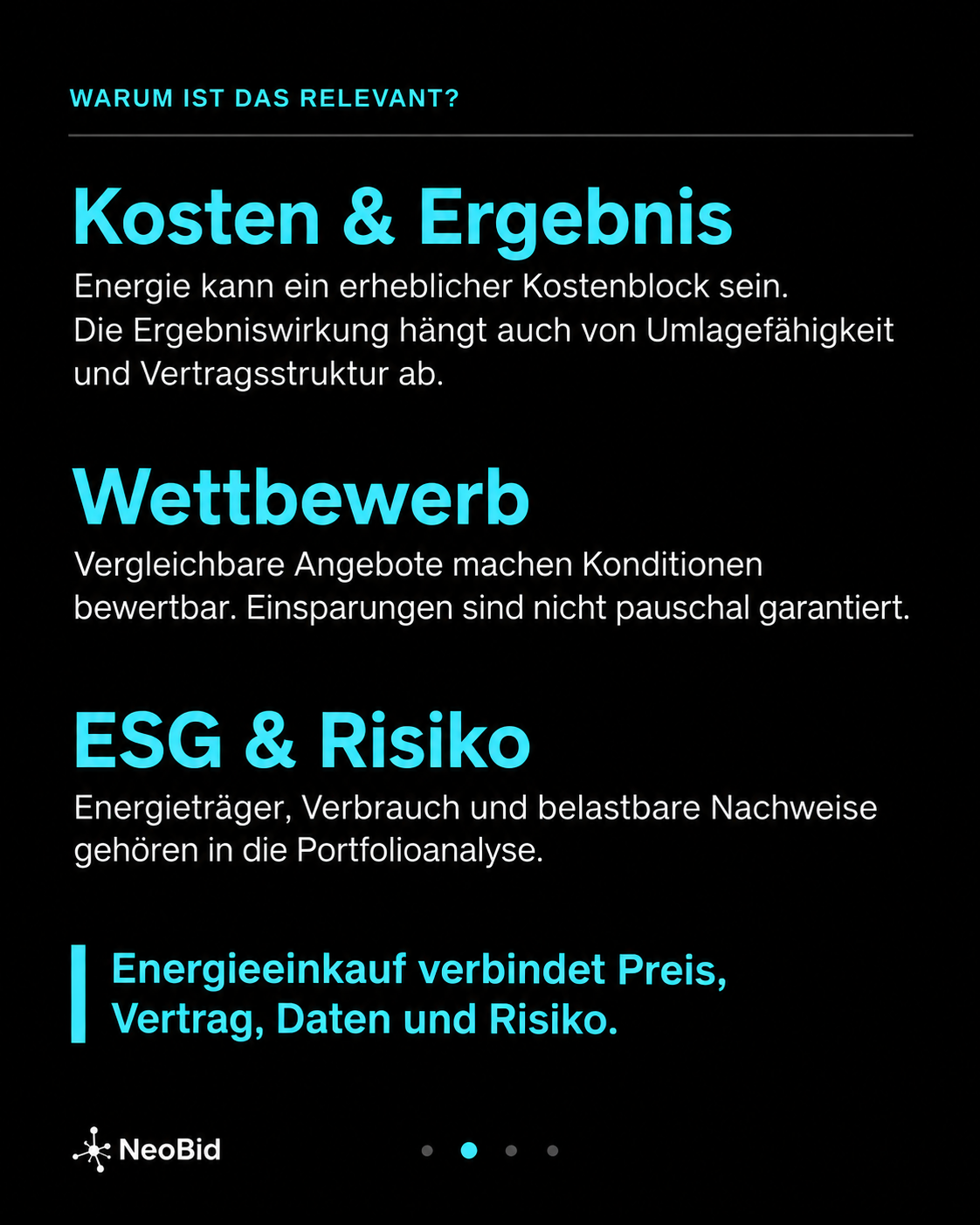
Annual energy costs in larger property portfolios may reach seven figures. The effect of cheaper procurement on returns depends on factors including consumption, vacancy, contract structure and cost recoverability. Savings therefore do not automatically improve net operating income (NOI) by the same amount.
Competition makes incumbent terms testable. The potential price advantage only becomes clear by comparing reliable offers for the same supply points, volumes and contract terms. This does not support a general savings promise.
Seven components of a reliable procurement concept
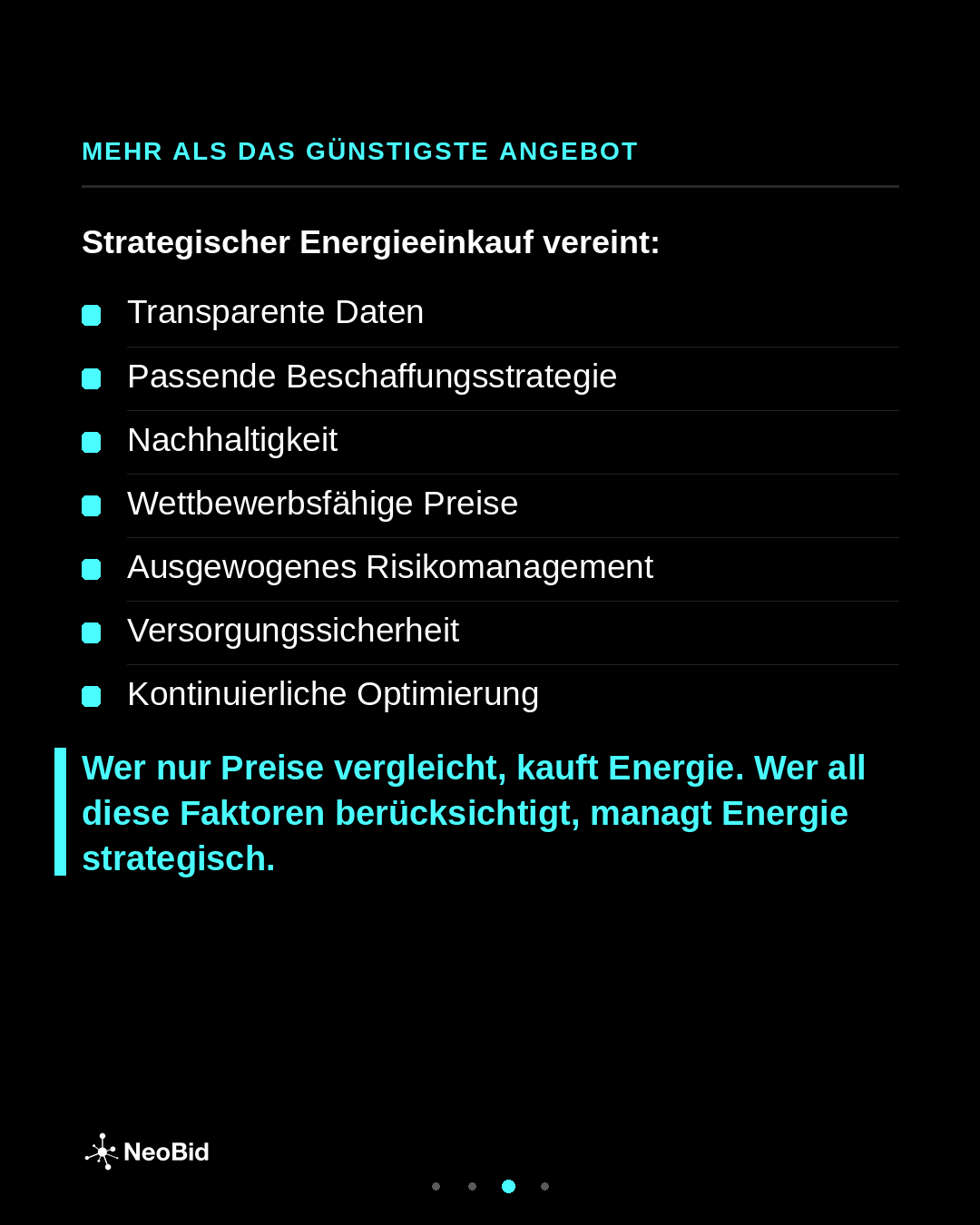
Transparent data: Record and clearly assign supply points, consumption, load profiles and contract deadlines.
Suitable strategy: Align the procurement model, duration and purchasing rules with the portfolio’s budget and risk tolerance.
Sustainability: Define energy type, origin and evidence requirements before tendering.
Competitive prices: Compare several offers using the same data basis and relevant total costs.
Balanced risk management: Check price guarantees, volume deviations, adjustment clauses, payment terms and supplier risks.
Reliable supply: Organise supply commencement, transitions and responsibilities clearly. Supplier selection alone does not guarantee technical resilience against outages.
Continuous optimisation: Review billing, consumption, deadlines and portfolio changes regularly.
This reveals which overall combination of price, contractual framework and supplier service suits the portfolio. The Federal Network Agency’s contract review guidance highlights duration, notice periods, price guarantees and payment arrangements, among other factors. Professional portfolios add individual volume and process requirements.
Assess sustainability and property value in context
Energy consumption, emissions and the long-term suitability of supply may affect lettability, valuation and financing. Their influence depends on the building, market and requirements of tenants, investors and lenders. Switching to a green electricity product therefore does not automatically improve an ESG rating or market value.
For green electricity, the German Environment Agency explains the role of guarantees of origin: they document the renewable origin of the allocated electricity volume. Any additional contribution to renewable expansion requires separate assessment. Procurement, consumption reduction and reliable reporting should therefore be considered together.
How platform and advice work together
Across many supply points, market and metering locations (MaLo/MeLo), load profiles, contracts and responsibilities need consistent maintenance. Spreadsheets can capture data, but larger portfolios increase the need for updates, version control and collaboration. A central digital platform can support these processes. The foundation remains a clear metering and data structure.
NeoBid combines its digital energy platform with strategic advice. The platform supports transparency, competition and traceable decisions; advice aligns procurement with the portfolio, risk profile and sustainability objectives. The overview of energy procurement for property portfolios describes this approach.
Conclusion: the overall offer matters
Price remains an important criterion. Only alongside data quality, contract terms, sustainability and risk can an offer’s suitability be assessed. Energy supply then becomes a transparent management task.
NeoBid helps translate your portfolio’s requirements into a procurement concept and assess offers on that basis.