
“We know our consumption, so we can tender.” Annual consumption is an important starting point. For comparable offers, suppliers also need details of supply points, consumption profiles and existing contracts. In property portfolios, the quality of these data helps determine the reliability of a tender.

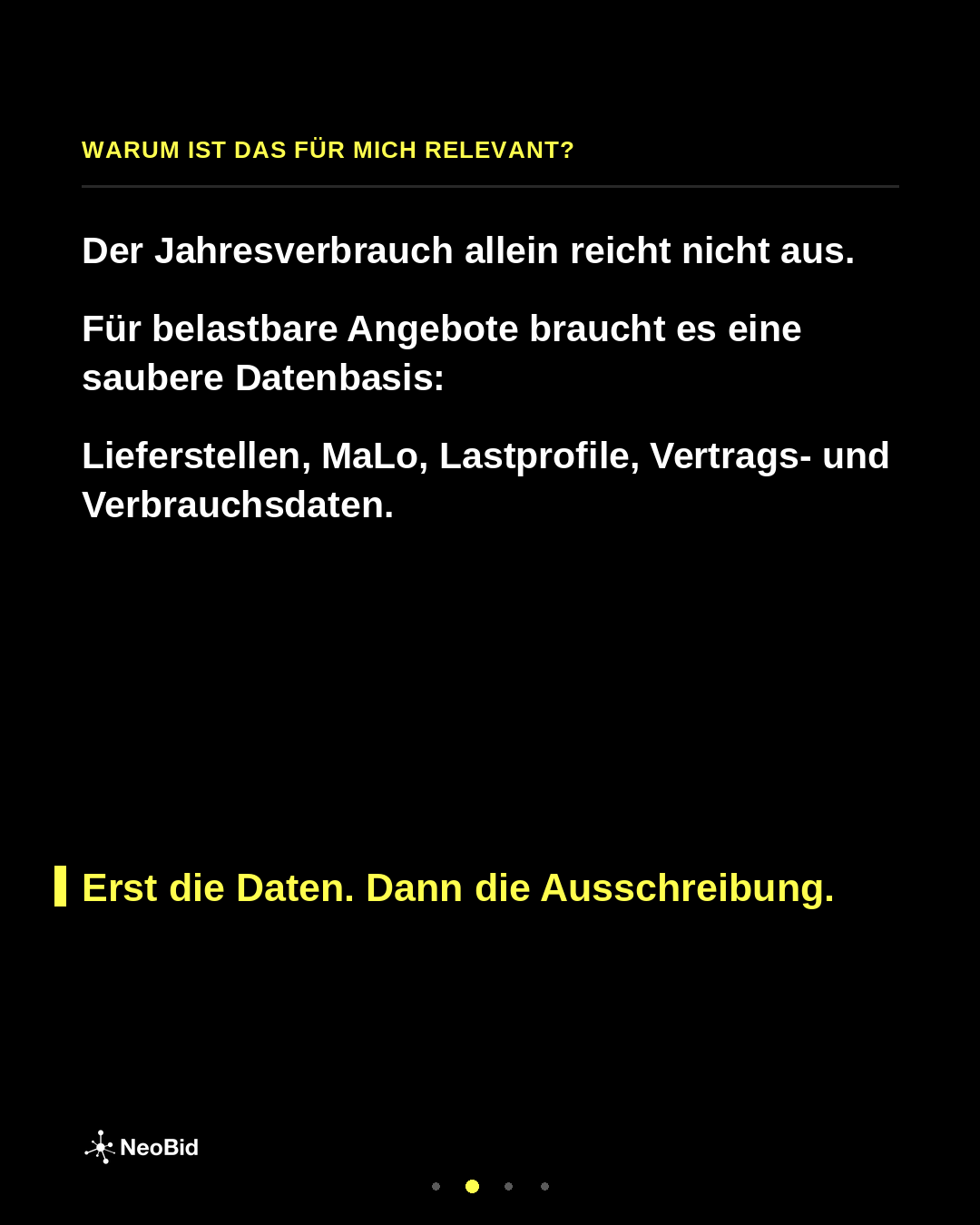
Why annual consumption alone is insufficient
A supplier prices more than total energy volume. Consumption timing, supply point and market location allocation, contract terms and supply commencement also matter.
Missing or contradictory information may trigger queries, complicate offer preparation or lead suppliers to price uncertainty into their calculations. Complete data enable comparison on the same basis.
Why the myth persists
Annual consumption is often available on a bill. Other information is spread across contracts, statements and portals. With multiple owners, managers or suppliers, a shared overview can quickly be lost.
Data preparation is invisible in the finished offer, but it affects whether suppliers can identify the portfolio clearly and assess the enquiry reliably.
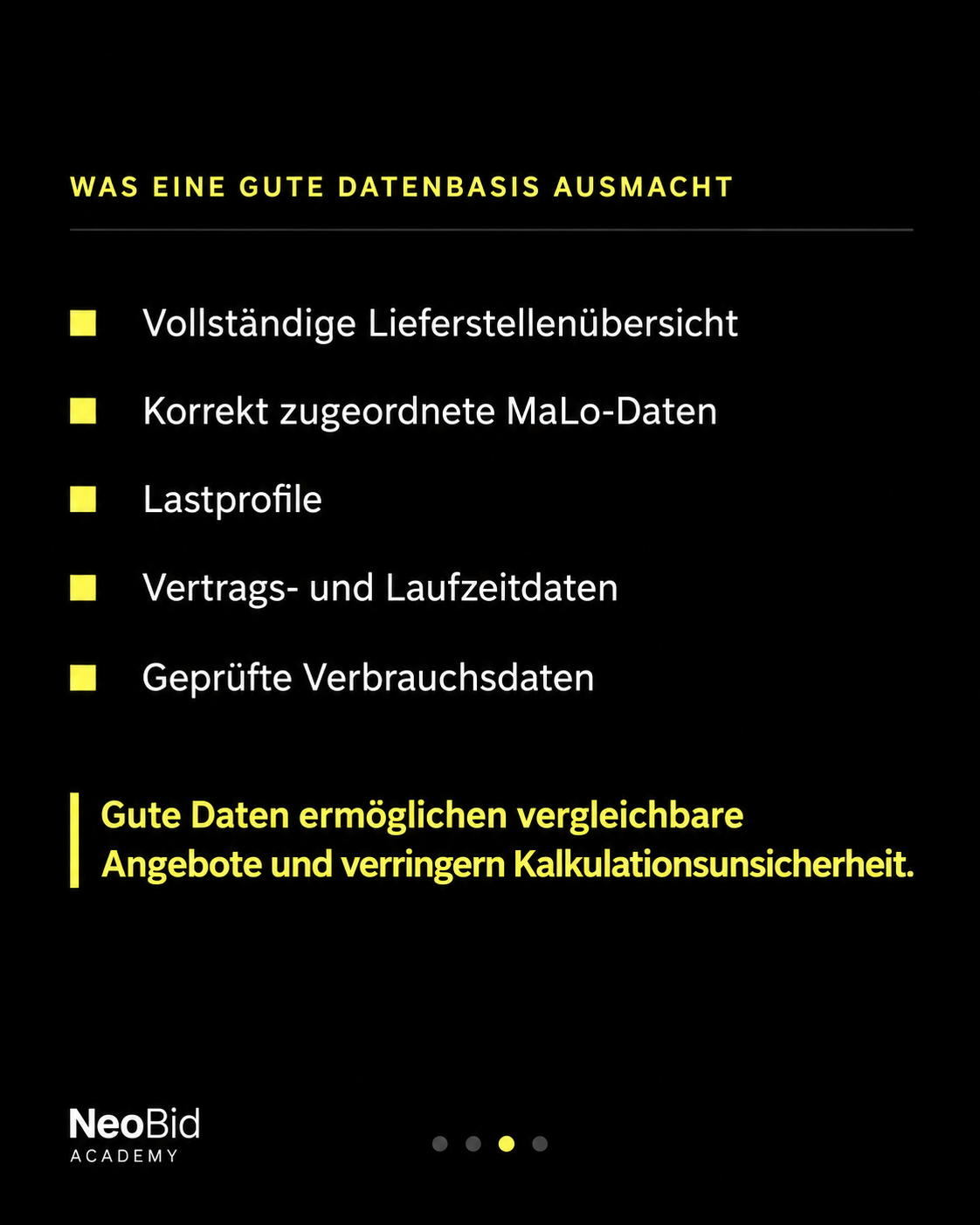
Five components of tender-ready data
Supply point overview: Record all included properties and meters and assign them to their respective owners or contracting parties.
Market location data: Assign each MaLo-ID to the correct supply point. The Federal Network Agency explains market location as an energy market term.
Consumption profiles: Represent consumption over time using the profile or load data available for each supply point.
Contract data: Bring together contract terms, notice periods, pricing conditions and possible supply start dates.
Checked consumption values: Check reference periods, units and anomalies; expressly identify assumptions and estimates.
How these details are combined is described in the article on metering and consumption data in property portfolios.
What data quality means for asset and property managers
For asset managers, the data basis affects how meaningful an offer comparison is. Property managers often know operational changes at the properties. Both perspectives should inform the tender so suppliers calculate using the same checked information.
The NeoBid platform structures supply points, MaLo data and load profiles as the basis for energy procurement for property portfolios. Good data do not guarantee a particular price, but reduce avoidable uncertainty in market comparison.
Conclusion: check data first, then compare offers
Knowing consumption is the beginning. A portfolio becomes tender-ready by connecting supply point, profile, contract and consumption data. This preparation supports transparent comparisons and informed procurement decisions.
Are your portfolio data ready for the next tender?
Discuss with NeoBid which information is available and which allocations or checks are still needed.