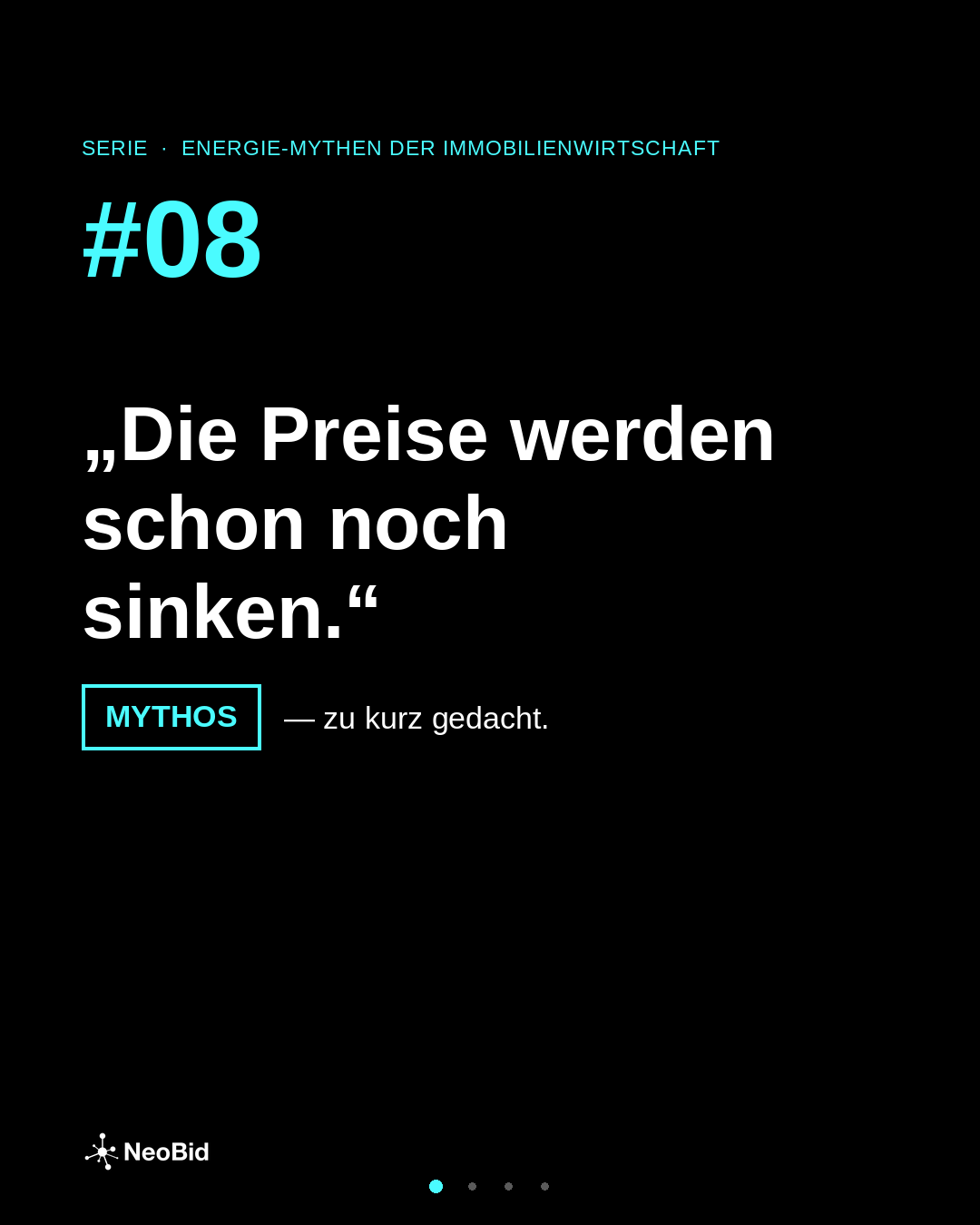
“Prices will come down eventually” is an understandable expectation, but not a reliable basis for energy procurement. Owners, asset managers and property managers therefore face another question: how can electricity and gas procurement be organised so budgets, deadlines and price risks remain manageable when markets move unexpectedly?
Why falling energy prices are not a planning basis
Energy prices respond to geopolitics, weather, storage levels and generation costs, including emissions allowances. Easing in one factor may reduce prices; new uncertainty may raise them again. The ACER 2026 market report assesses interactions between electricity and gas markets and weather and supply risks.
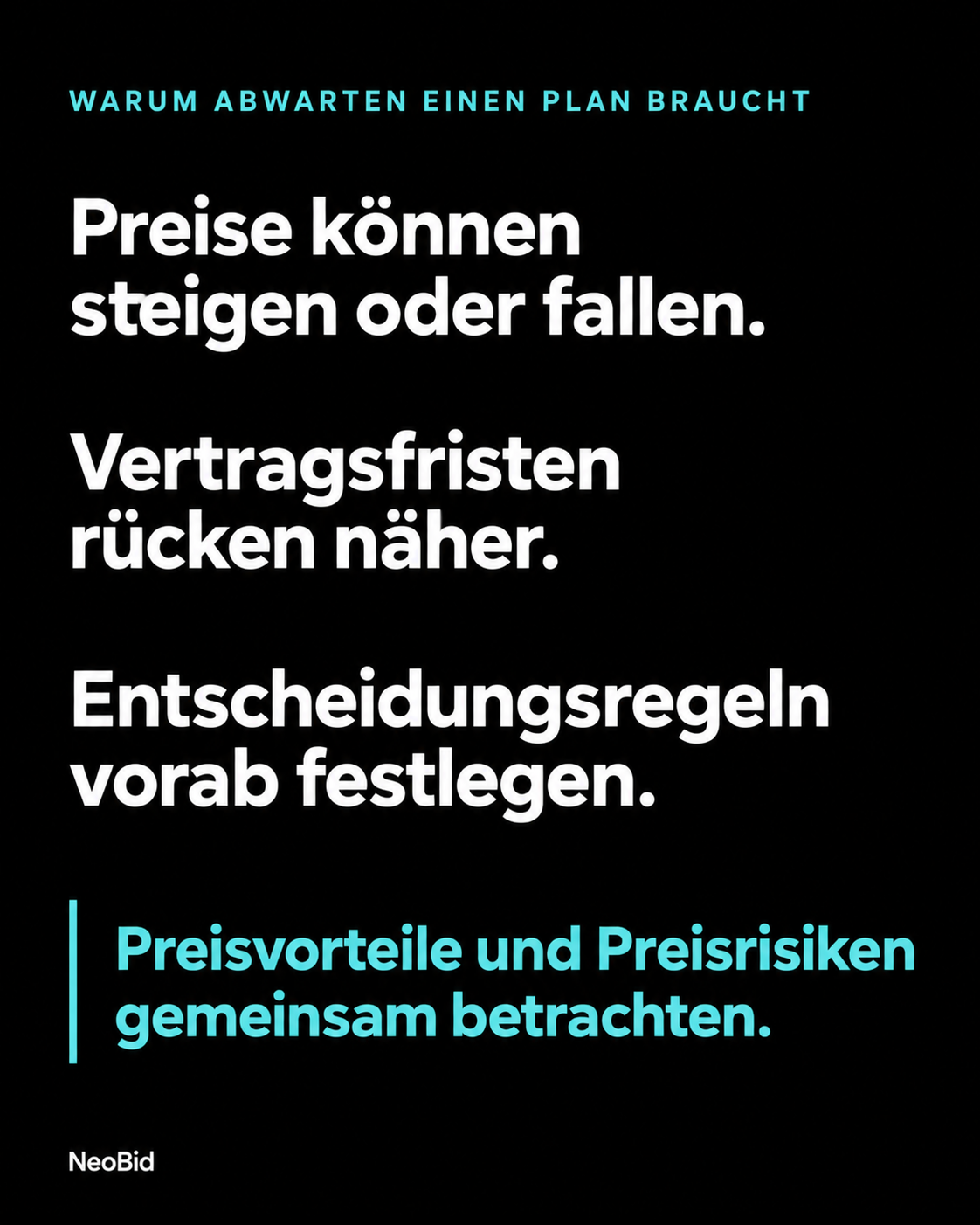
A possible price decline therefore does not establish a reliable purchasing date. For the portfolio, what matters is which price risks remain open and how they relate to the available budget.
What waiting often overlooks
“Wait a little longer” appears reasonable while a cheaper offer remains possible. At the same time, contract expiry draws nearer. Without defined decision rules, deliberate waiting may turn into procurement under time pressure.
Those purchasing later should consider not only potential price advantages but also rising prices, internal approvals and the remaining time for tendering and contracting.
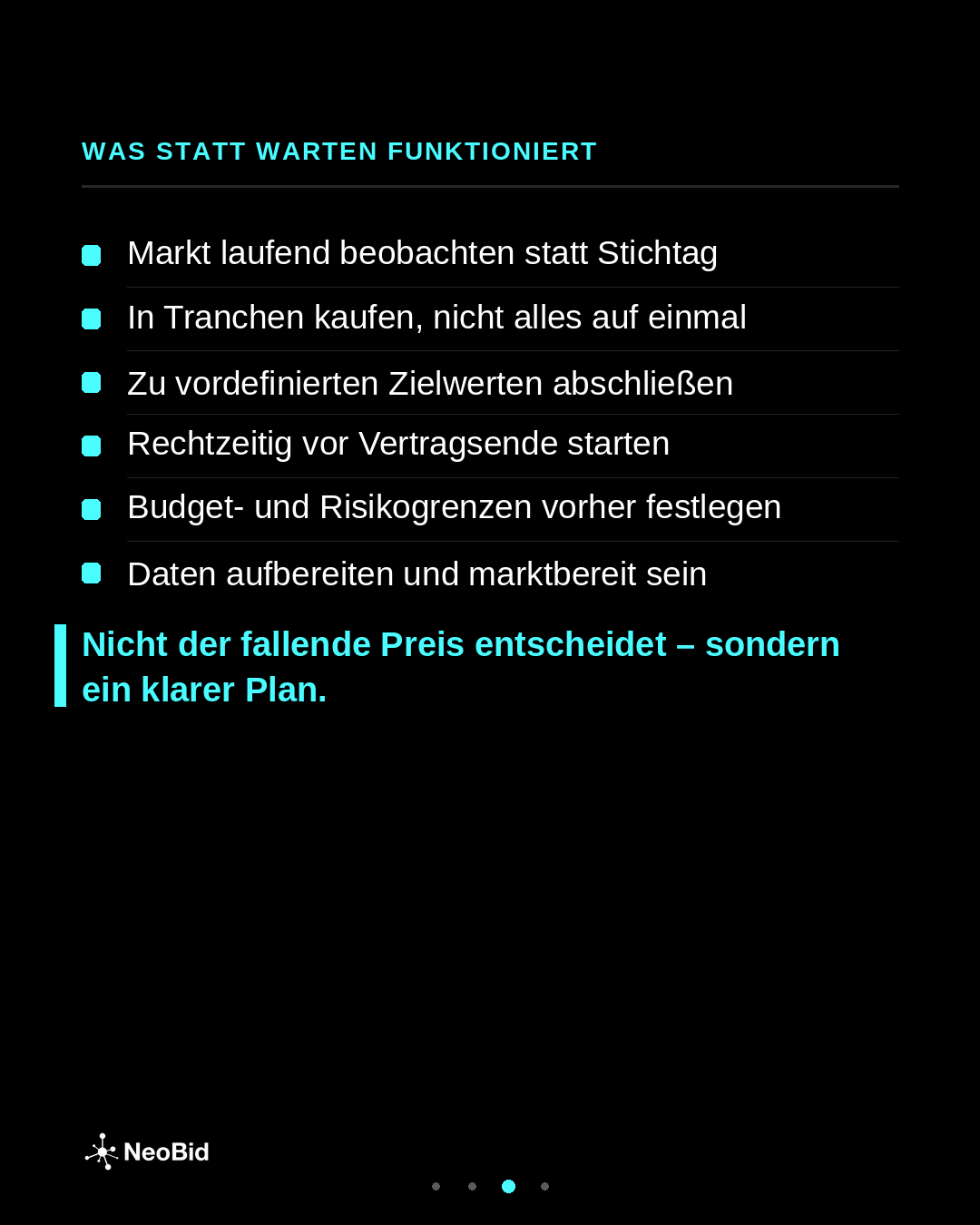
Six components of a manageable procurement plan
Market monitoring: Track developments continuously and compare offers for the same supply period.
Tranches: Spread suitable volumes across several purchasing dates. This reduces dependence on one transaction date but does not guarantee a lower average price.
Targets: Define beforehand the prices and conditions at which a contract is reviewed or approved.
Deadlines: Start sufficiently before contract expiry and account for notice periods and internal approvals.
Budget and risk: Clearly define budget limits and how volumes not yet purchased are handled.
Data: Consumption and metering data should be prepared so offers can be obtained and assessed at short notice.
Further reading: Why purchasing timing alone does not determine procurement quality.
How NeoBid supports implementation
NeoBid supports structured energy procurement for property portfolios through ongoing market monitoring and tranche purchasing at predefined targets. The focus is a transparent, repeatable process aligned with the portfolio’s budget and risk requirements.
Whether and to what extent tranches are suitable should be decided according to demand, the procurement model and contractual options.
Base procurement decisions on rules
Expectations of falling prices can form part of a market assessment. They do not replace a procurement plan. Clear targets, deadlines and risk limits help decisions remain possible when markets develop differently from expectations.
How prepared is your portfolio for its next procurement round?
Discuss with NeoBid how contract deadlines, budget requirements and suitable procurement steps can be brought into one plan.