
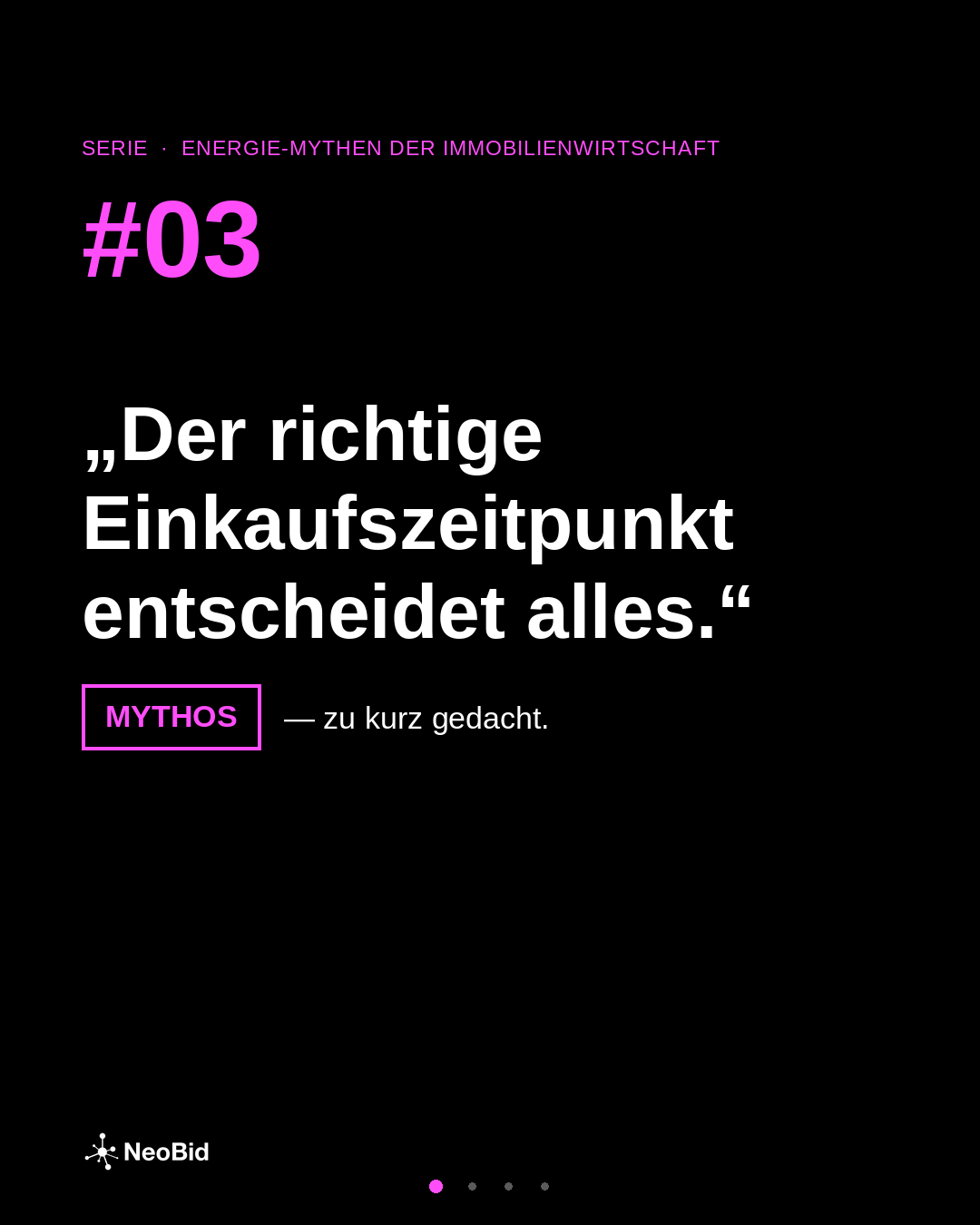
“We just need to catch the right moment.” For property portfolio energy procurement, that view is too narrow. Purchasing timing affects price, but the cheapest day is only known in hindsight. Predictable decisions therefore require clear rules for budgets, deadlines and price risks.
What price fluctuations mean for energy procurement
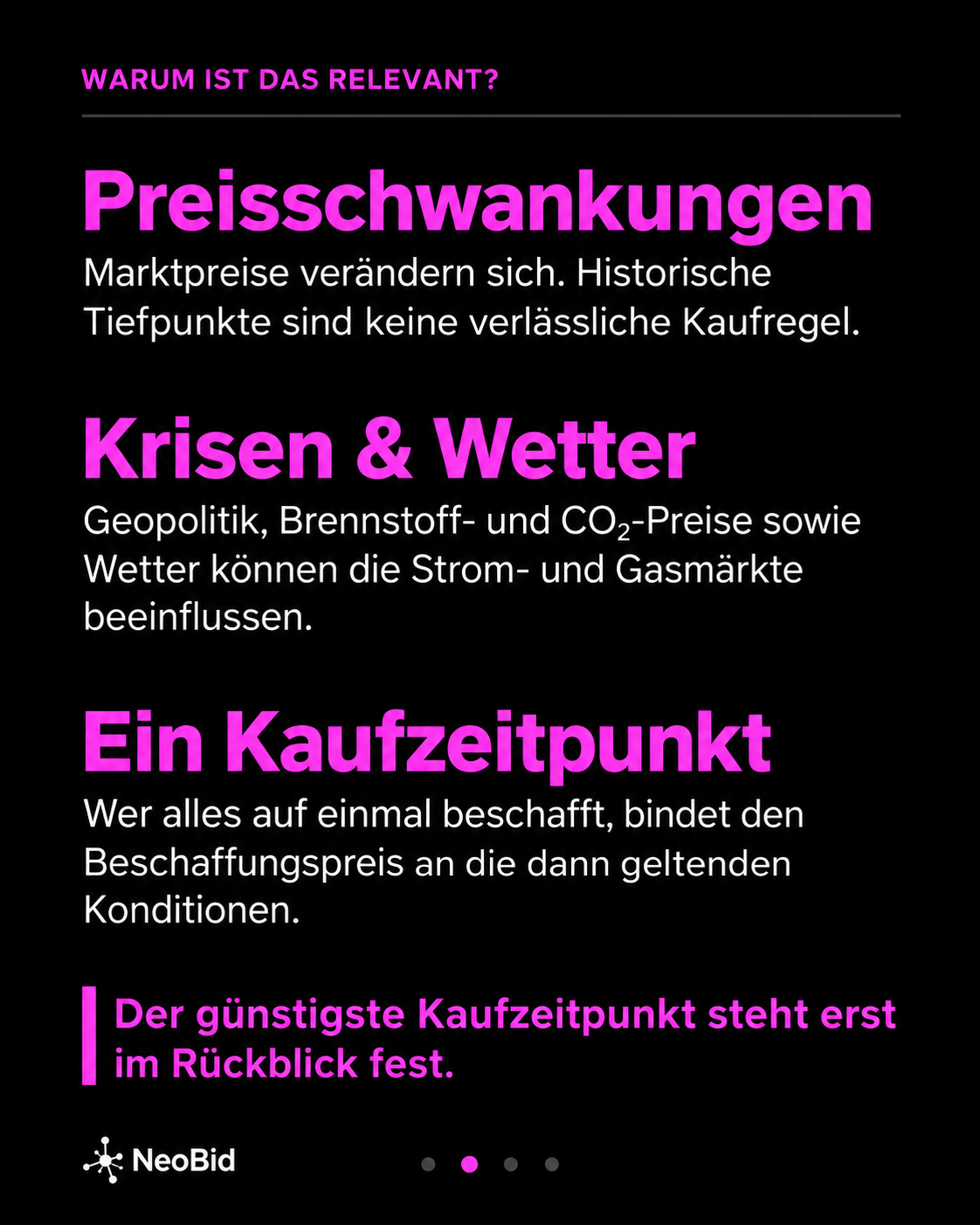
Purchasing timing affects price. This does not mean the cheapest day can reliably be identified in advance. Owners, asset managers and property managers must therefore also consider how much price risk the portfolio can bear before contracting.
The ACER market monitoring shows how weather, the generation mix and the interaction of gas and electricity markets shape price fluctuations. Historical lows help put the market in context; they are not reliable forecasts for the next purchase.
Why waiting for the best day is tempting
“Wait a little longer” seems plausible when prices have recently fallen. New information about geopolitics, fuels, carbon prices, weather or storage levels can change expectations. A favourable purchase in hindsight does not demonstrate a consistently superior forecasting method.
Waiting is itself a decision: while volumes remain unsecured, the portfolio bears the risk of rising prices. As contract expiry approaches, room for action may also shrink. This is explored further in myth #8 on waiting for lower energy prices.
Four rules for a transparent procurement process
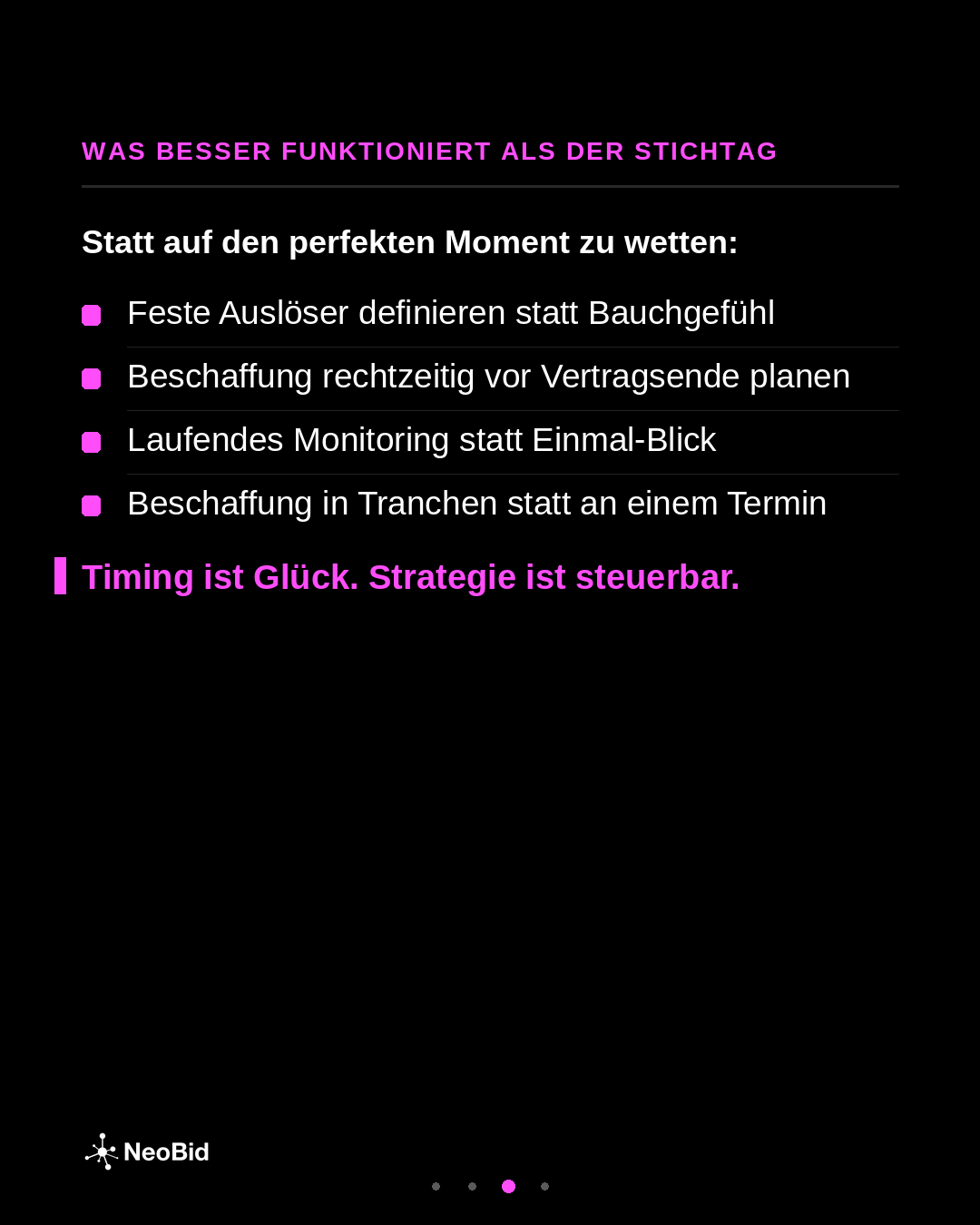
Define triggers in advance: Set price limits or calendar dates and align them with budgets, risk limits and decision-making authority.
Plan early: Record contract and notice deadlines, prepare data and allow enough time for tendering and approval.
Monitor the market continuously: Review prices and open volumes regularly. Monitoring should support decisions under agreed rules, not trigger daily changes of direction.
Assess tranches: Procure partial volumes at different times where volume and contract model make this useful. This reduces the overall price’s dependence on a single purchasing date.
Tranches spread timing risk but neither remove general price risk nor guarantee a lower average price. If prices fall continuously, a later one-off purchase may be cheaper. Previously agreed objectives and limits are decisive.
How NeoBid supports implementation
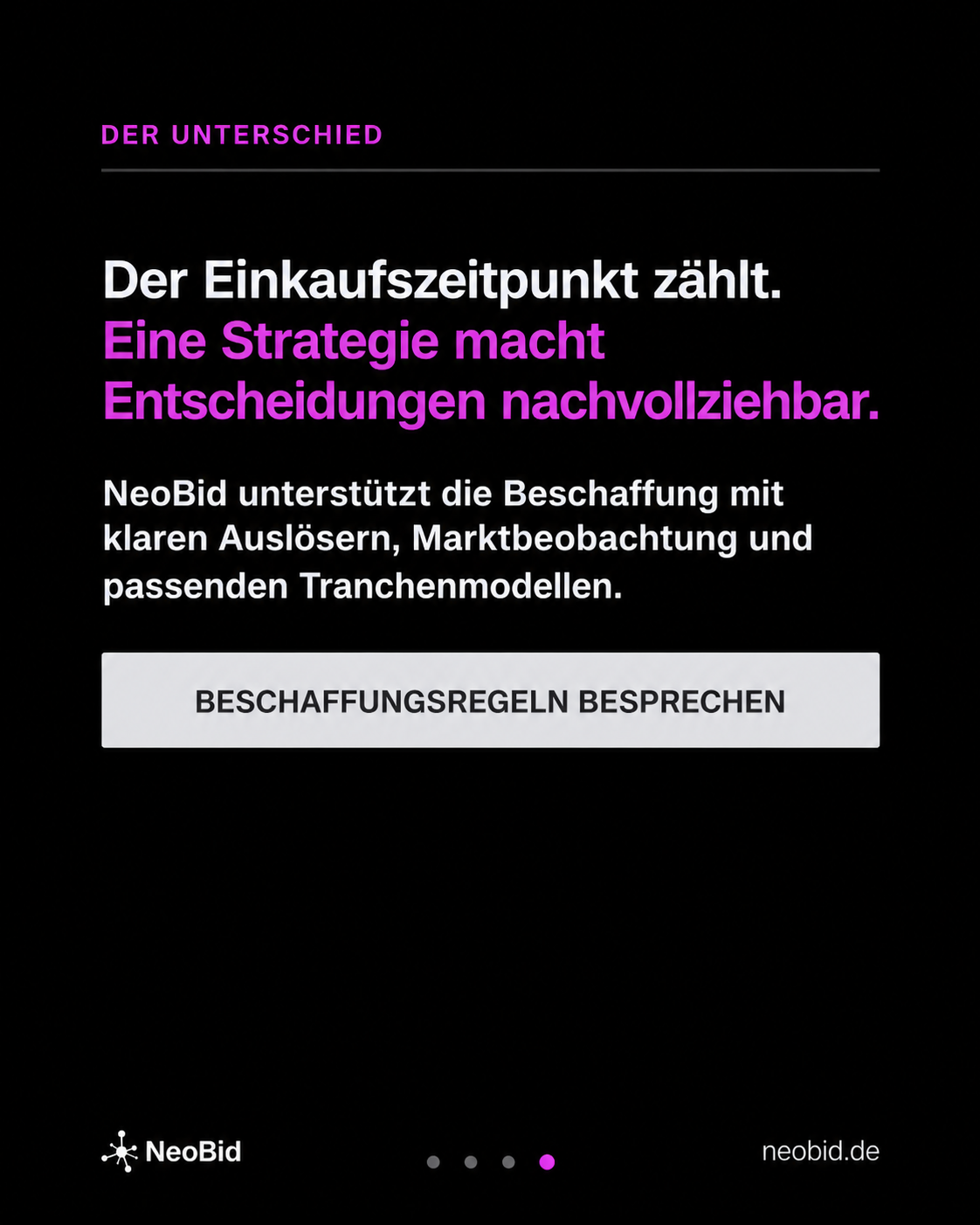
NeoBid combines defined triggers, ongoing market monitoring and suitable tranche models in a data-informed procurement process. Rules reflect the portfolio’s consumption, contract terms, budget and risk tolerance. Read more in the overview of energy procurement for property portfolios.
Conclusion: manage the process instead of assuming the market low
Purchasing timing remains relevant. A reliable strategy makes procurement less dependent on a single day’s decision and defines who acts, when and on what basis.
A practical rule framework can be developed for your portfolio, covering purchasing triggers, approvals, deadlines and a suitable volume split. NeoBid helps you develop this framework.