Energy procurement for property portfolios has become more complex. Volatile markets, different contract terms, numerous supply points and increasing sustainability requirements create new challenges for owners, asset managers and property managers.
A good energy partner should therefore offer much more than comparing individual electricity and gas prices. What matters is the ability to assess a portfolio as a whole, aggregate volumes effectively, create competition and develop a suitable procurement strategy.
How can a specialist energy partner be recognised?

1. Property expertise
Energy procurement for a property portfolio differs from procurement for an industrial business. Offices, residential, logistics and retail properties, hotels and mixed-use neighbourhoods have different consumption profiles and contractual requirements.
They also involve owners, property companies, property managers, tenants and sometimes several hundred supply points. A suitable partner understands these responsibilities and combines energy market knowledge with portfolio management processes.
2. Access to suitable suppliers
A tender should reach regional, national and specialist suppliers suited to the portfolio. Tender volume, consumption structure and contractual requirements determine which providers are appropriate.
The partner should explain which suppliers they approach and how comparable offers are obtained. The existing supplier's offer should also be included in a structured market comparison.
3. A clear procurement strategy
The lowest price on a particular day does not determine procurement quality on its own. The model must suit the portfolio, budget and owner's risk appetite.
Options include fixed-price contracts, tranche procurement, spot or index models, combinations of these and longer-term power purchase agreements (PPAs). A suitable partner explains the opportunities, risks and prerequisites of each model and documents the basis for the decision.
4. Effective aggregation at portfolio level
Individual small supply points may be less attractive to suppliers and involve relatively high administration costs. Aggregating several properties can attract additional suppliers, standardise processes and enable better terms.
The partner should assess which volumes and contractual requirements can sensibly be tendered together. The assessment should cover both the portfolio and its individual properties.
5. Sustainability and commercial viability
Sustainable energy procurement goes beyond the label “green electricity”. Depending on the ESG strategy, guarantees of origin, PPAs, biogas, regional or technology-specific origin criteria and on-site generation may be relevant.
A suitable partner compares these options against requirements for commercial viability and security of supply. They explain which evidence and products fit the portfolio's strategy.
6. Transparent costs and remuneration
For a transparent comparison of offers, owners and property managers should receive answers to six questions:
Which suppliers were approached?
Which offers have been received?
How are the prices made up?
Which contract durations and terms apply?
How is the energy partner remunerated?
What commercial relationships exist with suppliers?
This information allows decisions to be reviewed and documented.
7. Structured digital processes
A tender begins with complete supply point, meter, consumption and contract data. Existing suppliers, contract terms and notice periods must also be recorded.
A suitable partner provides a clear process for collecting, checking and maintaining this information. Reliable metering and consumption data support the current tender and provide the foundation for future procurement and energy management.
8. Representation of interests and independence
The energy partner should represent the client's interests and be able to compare suppliers and procurement models objectively. Their recommendation must follow from the portfolio's requirements.
Alongside transparent remuneration, it matters how commercial relationships with market participants are considered in selection and evaluation. Independence should be demonstrable through these processes.
9. Support throughout the contract term
The work does not end when the contract is signed. Acquisitions and disposals, new or removed supply points, changes of occupier and changing consumption must be managed during the term. Energy and emissions data are also needed for internal management, ESG reporting and service charge statements.
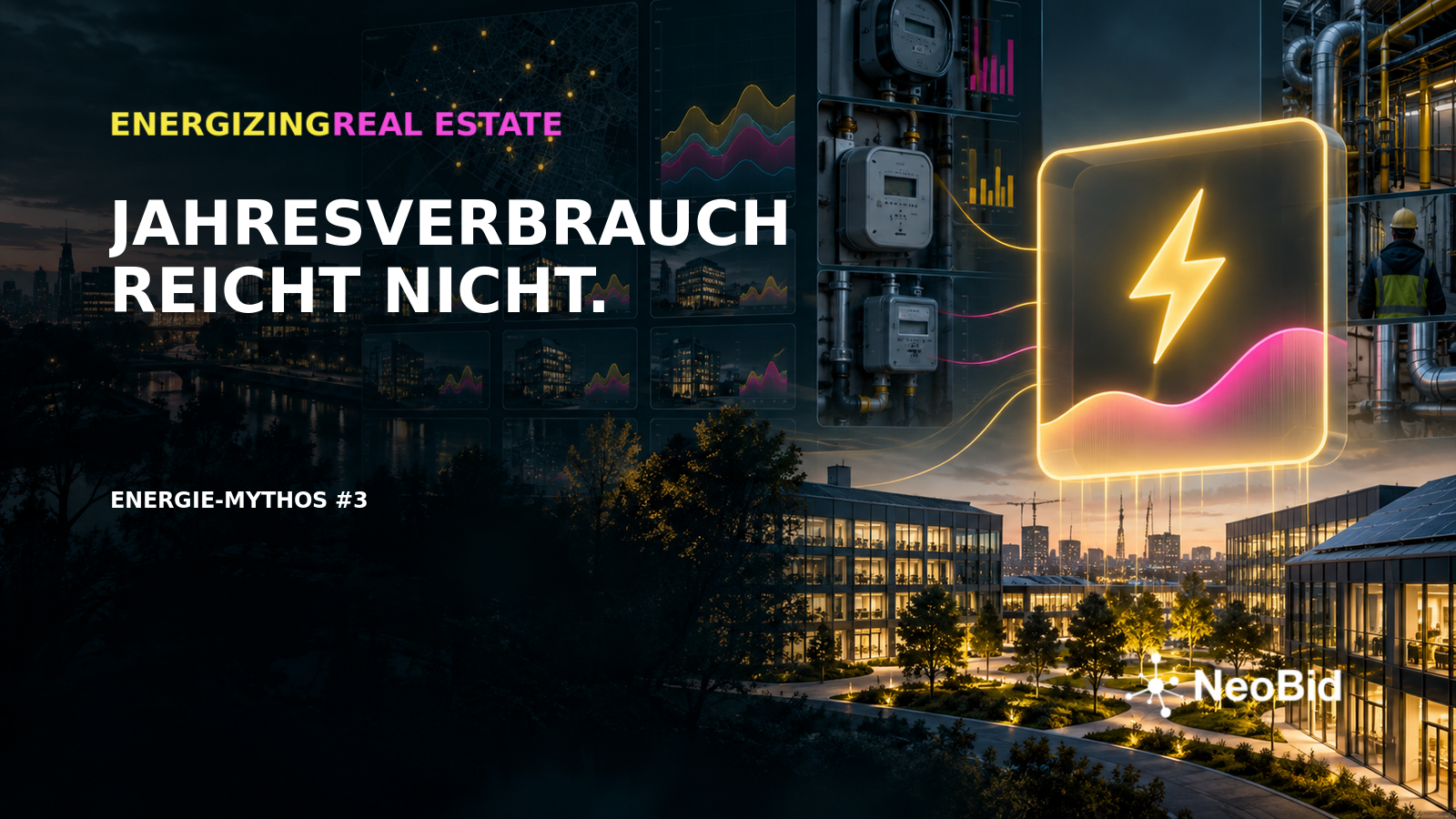
A central data platform should bring together the following information in particular:
Properties and their supply points
Electricity and gas consumption
Meter and contract data, including contract terms and notice periods
Supply point changes, acquisitions and disposals
Energy and CO₂ data
Data for ESG reporting and service charge statements
A continuously maintained data set makes consumption trends and deadlines visible. It supports preparation for the next tender and energy procurement throughout the portfolio's lifecycle.
Base the selection on verifiable services
Property expertise, market knowledge, competition, procurement strategy, sustainability and data management belong together. What matters is how a partner applies and documents these capabilities in the specific mandate.
NeoBid helps owners, asset managers and property managers structure electricity and gas procurement for property portfolios , aggregate volumes and involve suitable suppliers. Digital processes are combined with supplier access and an assessment of conventional and sustainable procurement models.
How is your energy procurement organised today?
Discuss your existing supply arrangements and the options for tendering, aggregation and ongoing data management with NeoBid.