
More transparency for better procurement decisions
Owners, asset managers and property managers need to consider which delivery years, volumes and risks an offer covers alongside price levels. This update assesses electricity and gas forward prices from a professional property portfolio perspective.
Historical market position: 26 June 2026 (calendar week 26). The following figures describe the market at that time and are not current offers or price forecasts.
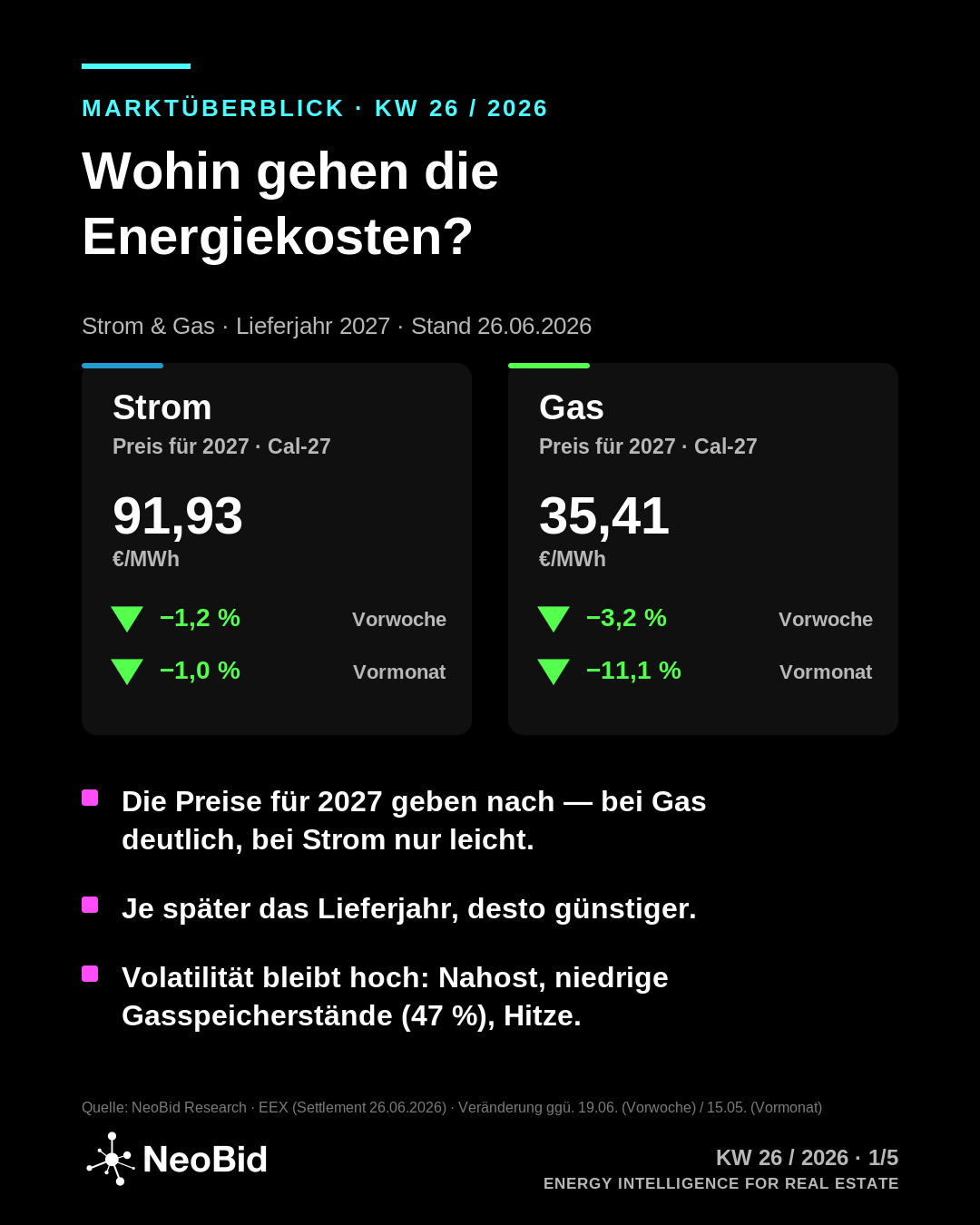
NeoBid’s assessment at the time reported €91.93/MWh for electricity and €35.41/MWh for gas for delivery in 2027, based on the EEX annual contracts identified in the graphics. Both prices were below the previous week’s values; gas declined by around 11% in the monthly comparison shown.
Read the forward curve correctly
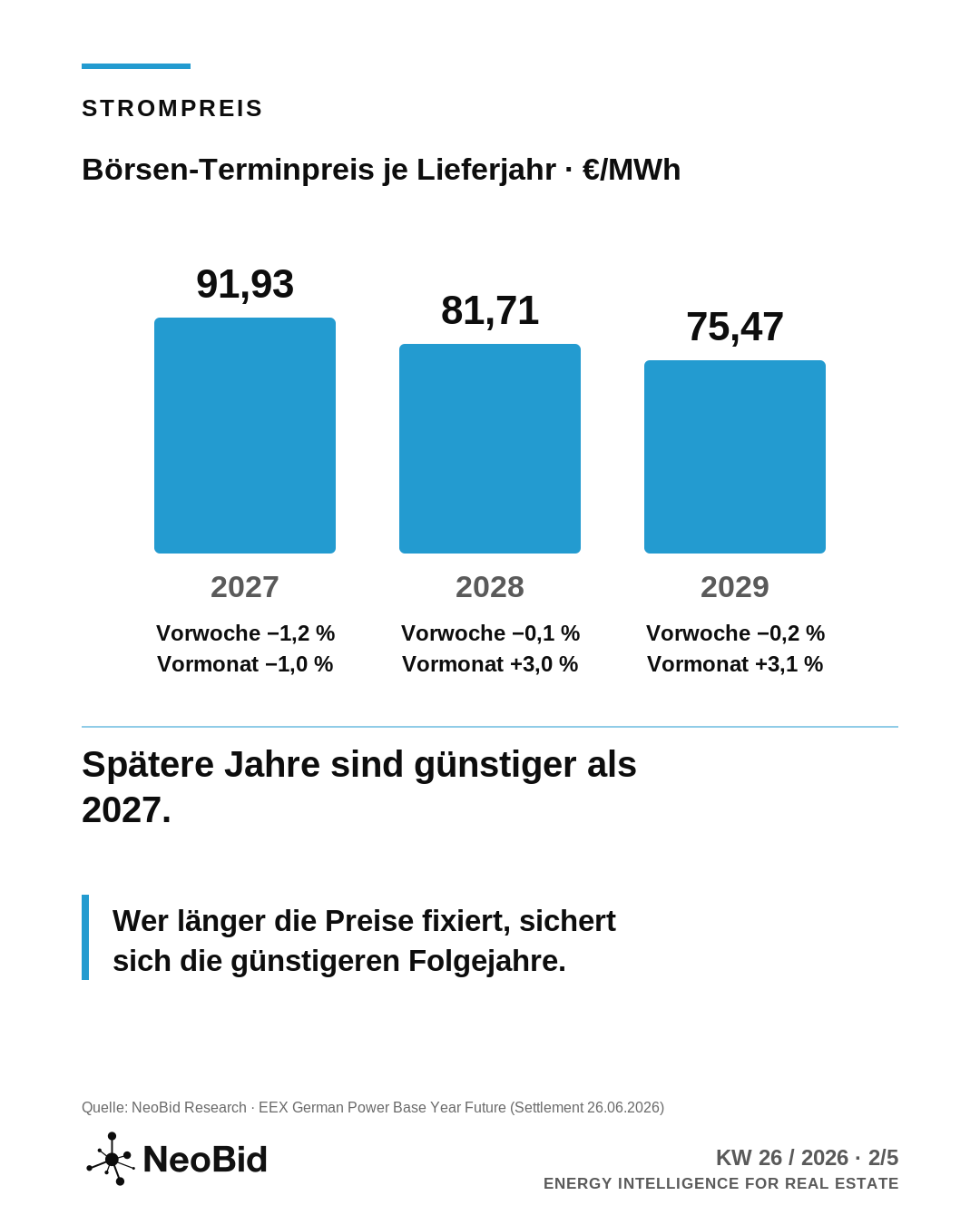
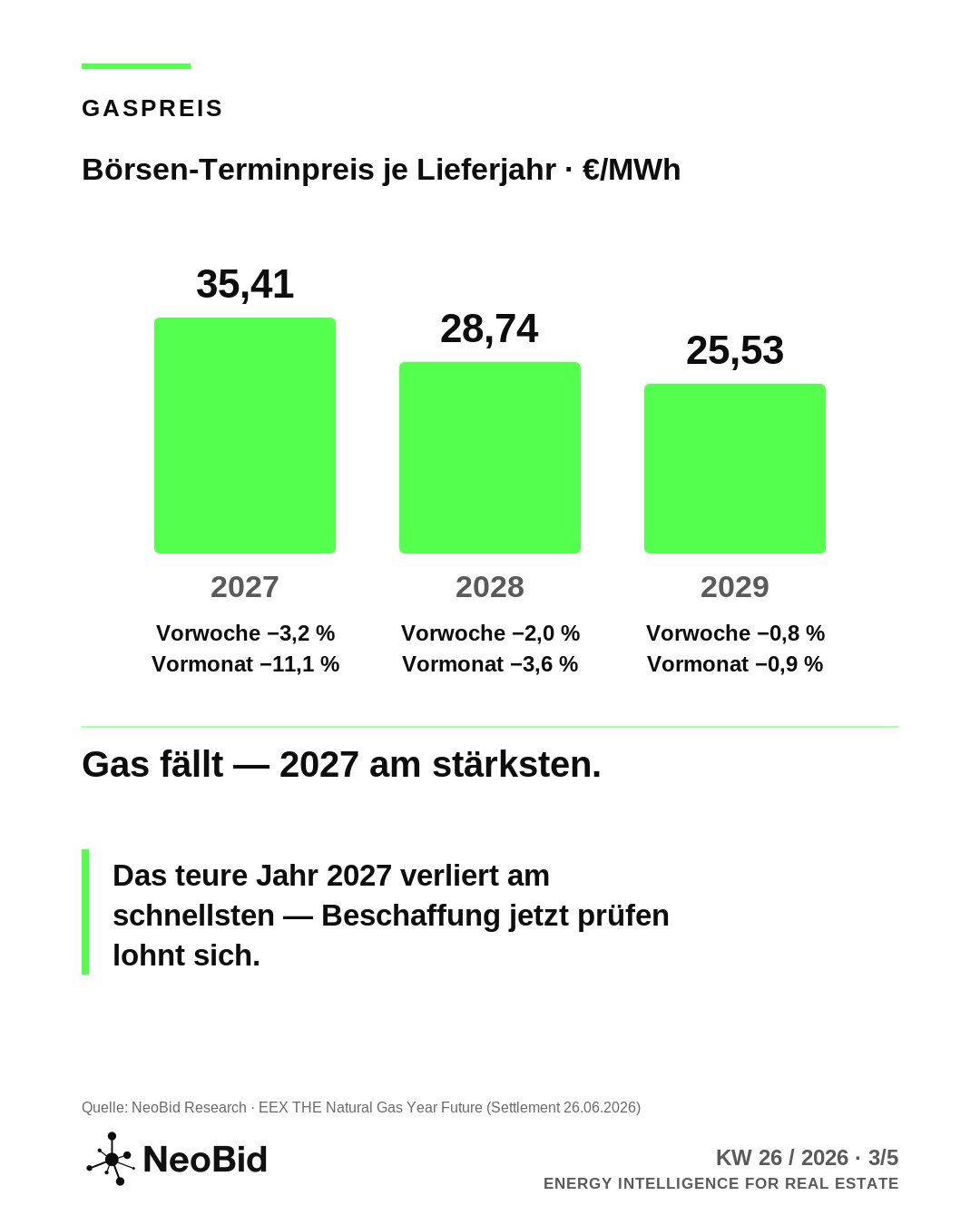
On the reference date, forward prices for later delivery years were below those for 2027. The electricity curve shown ranged from around €92/MWh for 2027 to €75/MWh for 2029; gas ranged from around €35/MWh to €26/MWh.
A downward-sloping forward curve is not a forecast of falling market prices. It shows simultaneously traded prices for different delivery periods. A 2029 price therefore cannot be applied to 2027 demand. Multi-year procurement must match actual consumption and planning certainty in each delivery year.
Exchange values are also not complete supply prices. Supplier terms, consumption profiles and other price components require separate consideration in offer comparisons.
Assess weather, storage and geopolitics as risk factors
The update at the time referred to heat, French nuclear availability, European gas storage at around 47%, and uncertainty in LNG supply chains and the Middle East. These factors can affect prices, but no single factor establishes a clear price direction.
To put the heatwave in context, French transmission operator RTE stated in its 25 June noticethat electricity supply remained adequately secured despite high temperatures. Supply security and short-term price fluctuations must be assessed separately.
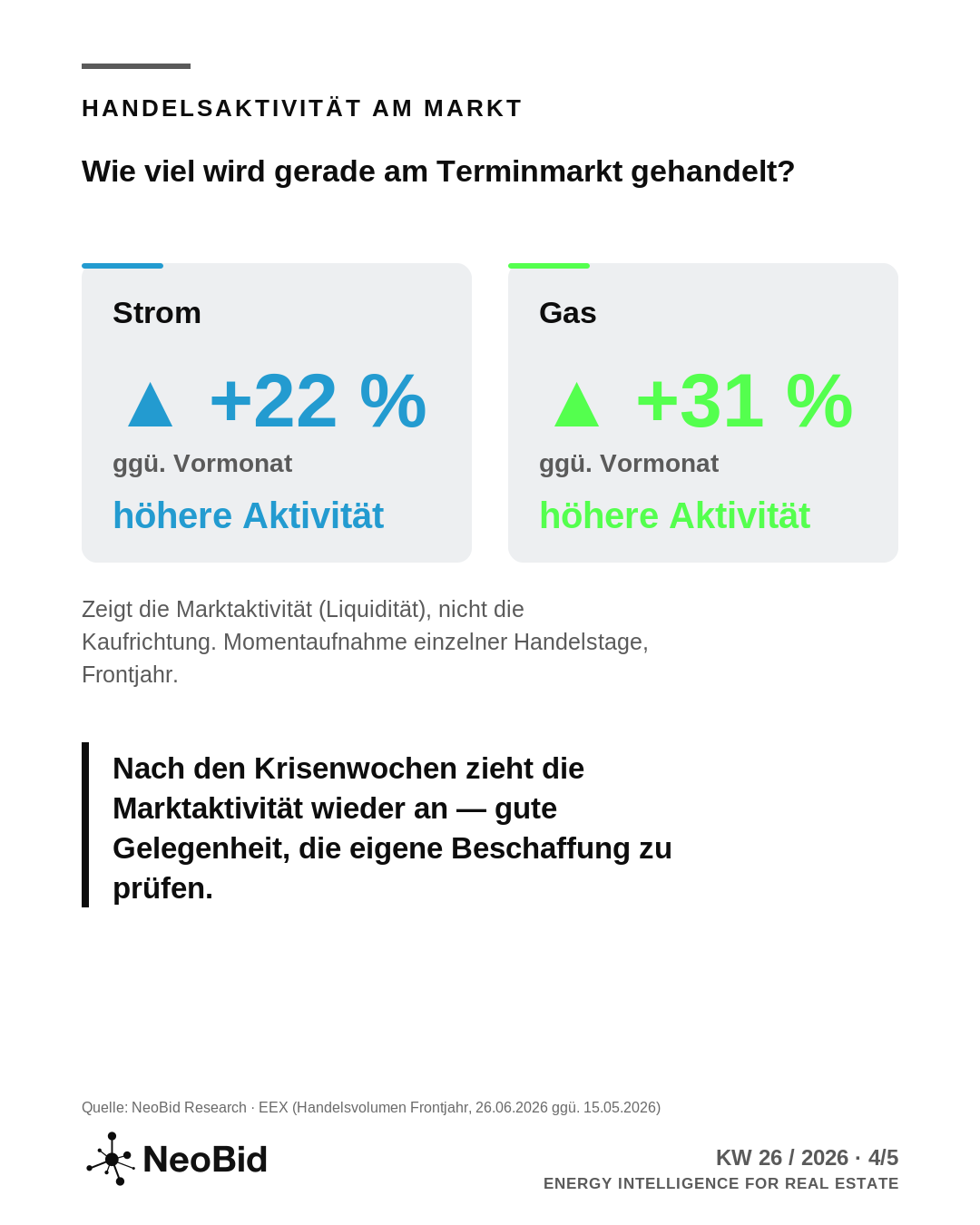
Higher trading volume shown in the gallery is not a buying signal in itself. The metric describes activity on selected trading days, not subsequent price developments.
Turn market monitoring into a procurement timetable
Property portfolios need to connect market information with contract deadlines, volume planning and internal approvals. Three points support preparation:
Demand per delivery year: Account for open volumes, planned disposals, vacancy and consumption changes.
Purchasing rules: Define decision deadlines, targets and responsibilities in advance.
Risk distribution: Assess whether staged purchasing suits the portfolio and contractual model. It reduces dependence on one purchasing date but does not guarantee a lower average price.
Allocating purchases across different delivery years and purchasing in several tranches are separate decisions. Myth 3 on purchasing timing explains how binding rules support procurement.
Conclusion: connect market prices with portfolio demand
The June 2026 market position showed lower forward prices for later delivery years alongside significant short-term risks. This does not imply a general buying recommendation. Actual demand, comparable contract terms and a coordinated timetable are decisive.
NeoBid supports market monitoring and structured offer comparison. The overview of energy procurement for property portfolios describes the process. Together, open delivery years and upcoming decisions can be incorporated into a procurement timetable.