
Easing pressure or just a brief pause?
In July 2026, energy prices for delivery in 2027 responded strongly to geopolitical developments. A sharp rise was followed by a pullback by 28 July. For professional property portfolios, this illustrates the importance of prepared data, clear deadlines and a well-defined procurement strategy.


Market position on 28 July 2026
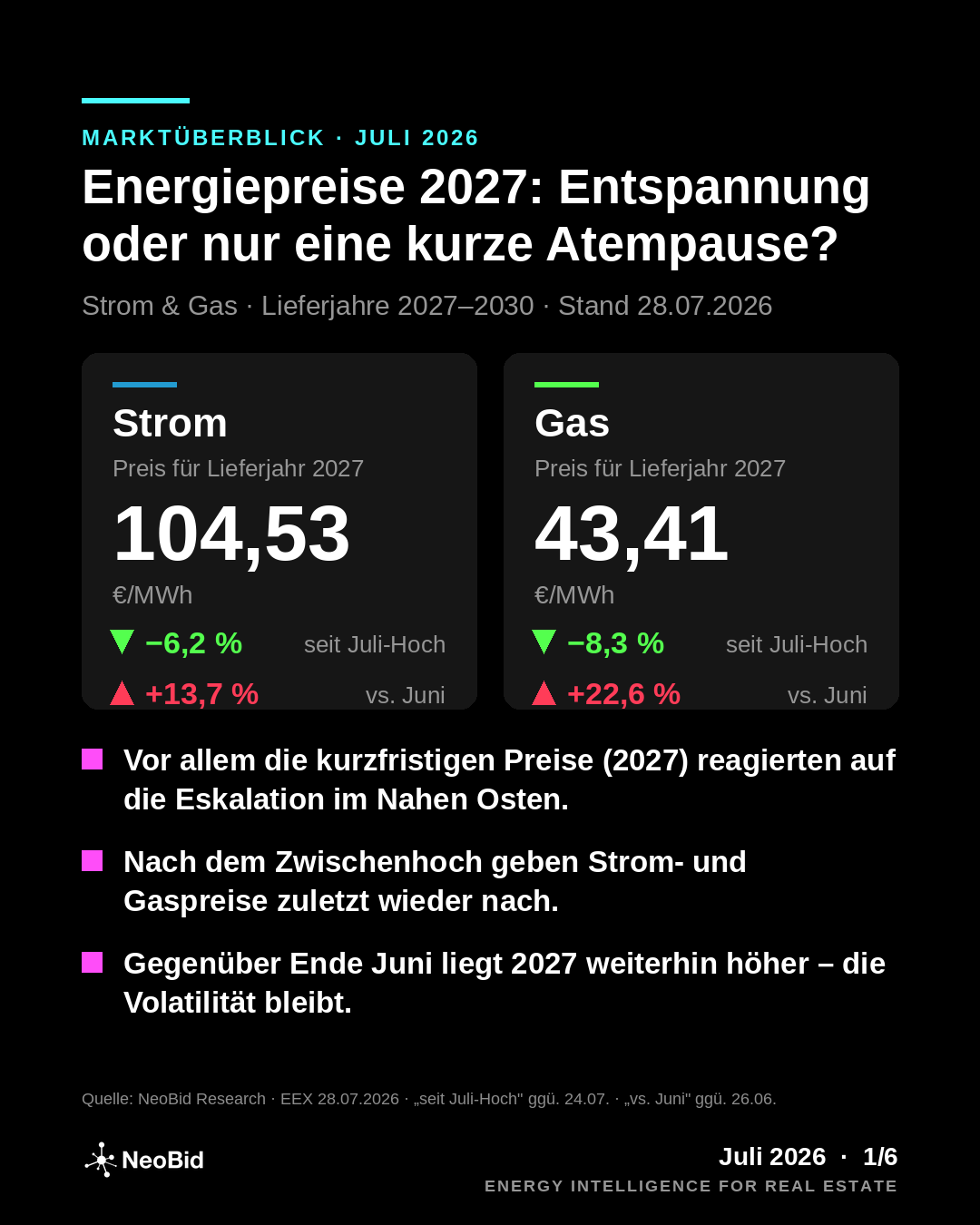
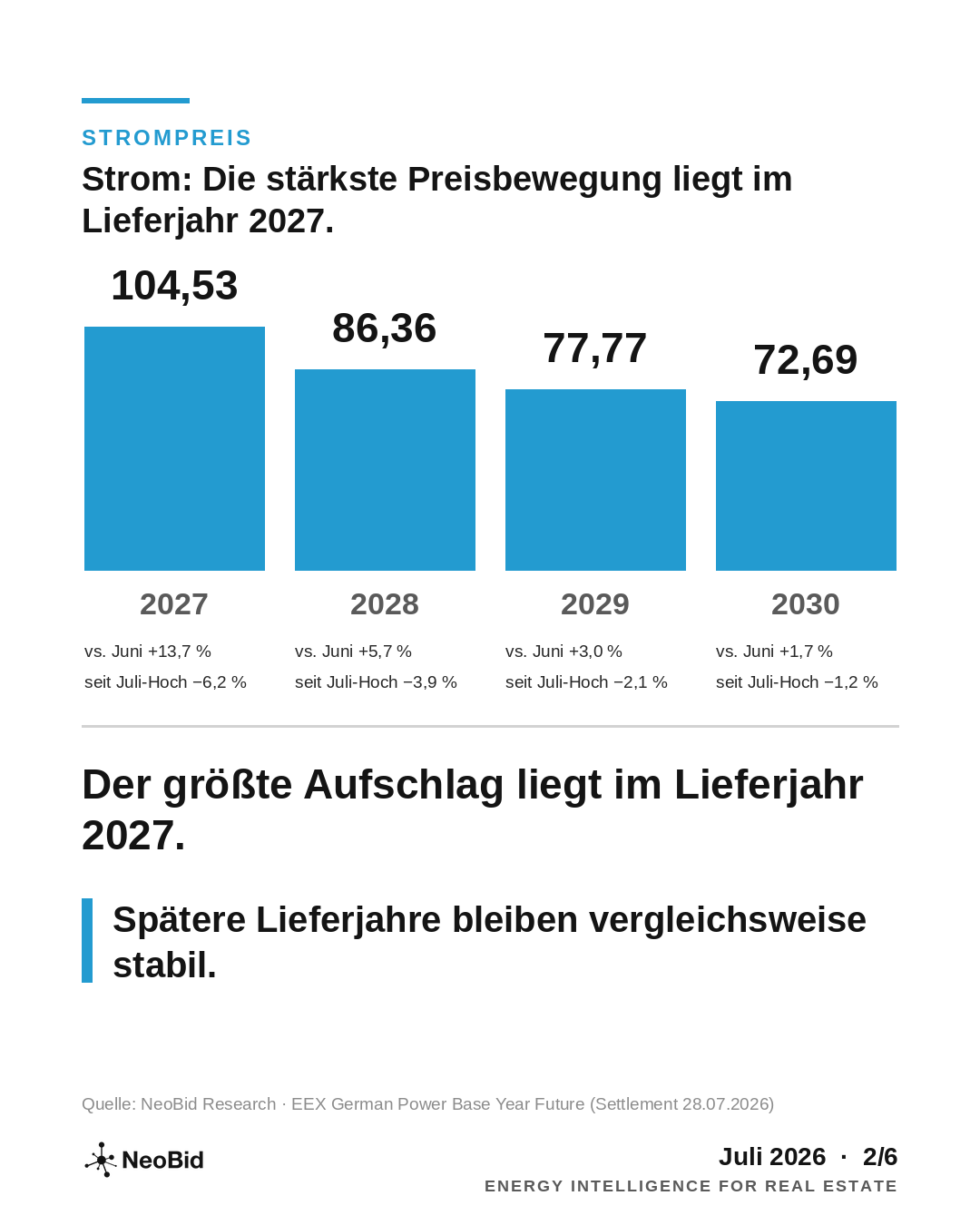
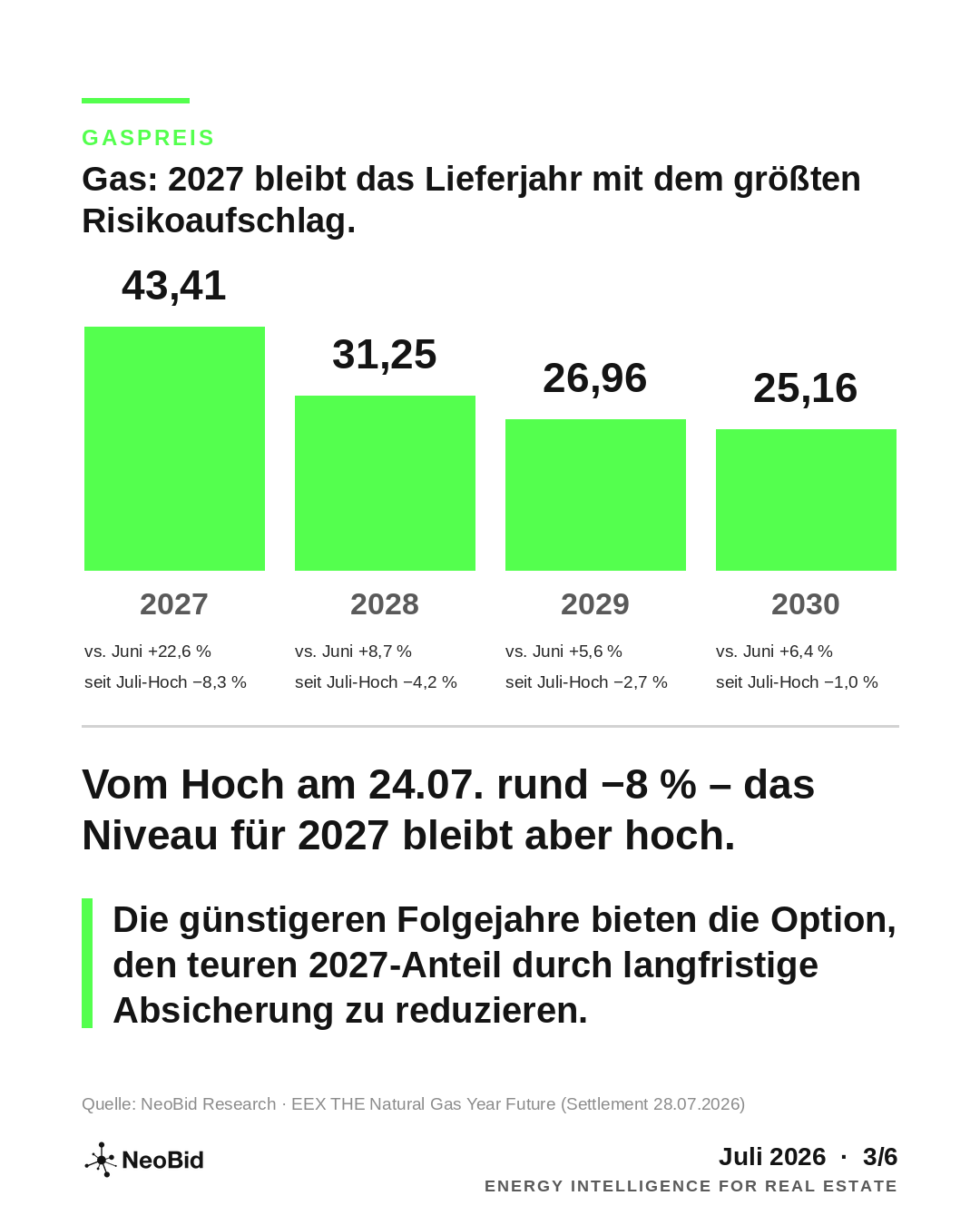
On the EEX futures market, electricity for delivery in 2027 stood at €104.53/MWh and gas at €43.41/MWh (settlement on 28 July 2026). Compared with the end of June, this represented increases of 13.7 per cent for electricity and 22.6 per cent for gas. The escalation in the Middle East was identified as a major driver in the market commentary at the time.
The movement was concentrated in the front year, 2027. Later delivery years rose less sharply: for 2029, electricity was 3.0 per cent and gas 5.6 per cent above the end of June. The price premium was therefore particularly pronounced in the nearest delivery year.
What the decline after the July peak means
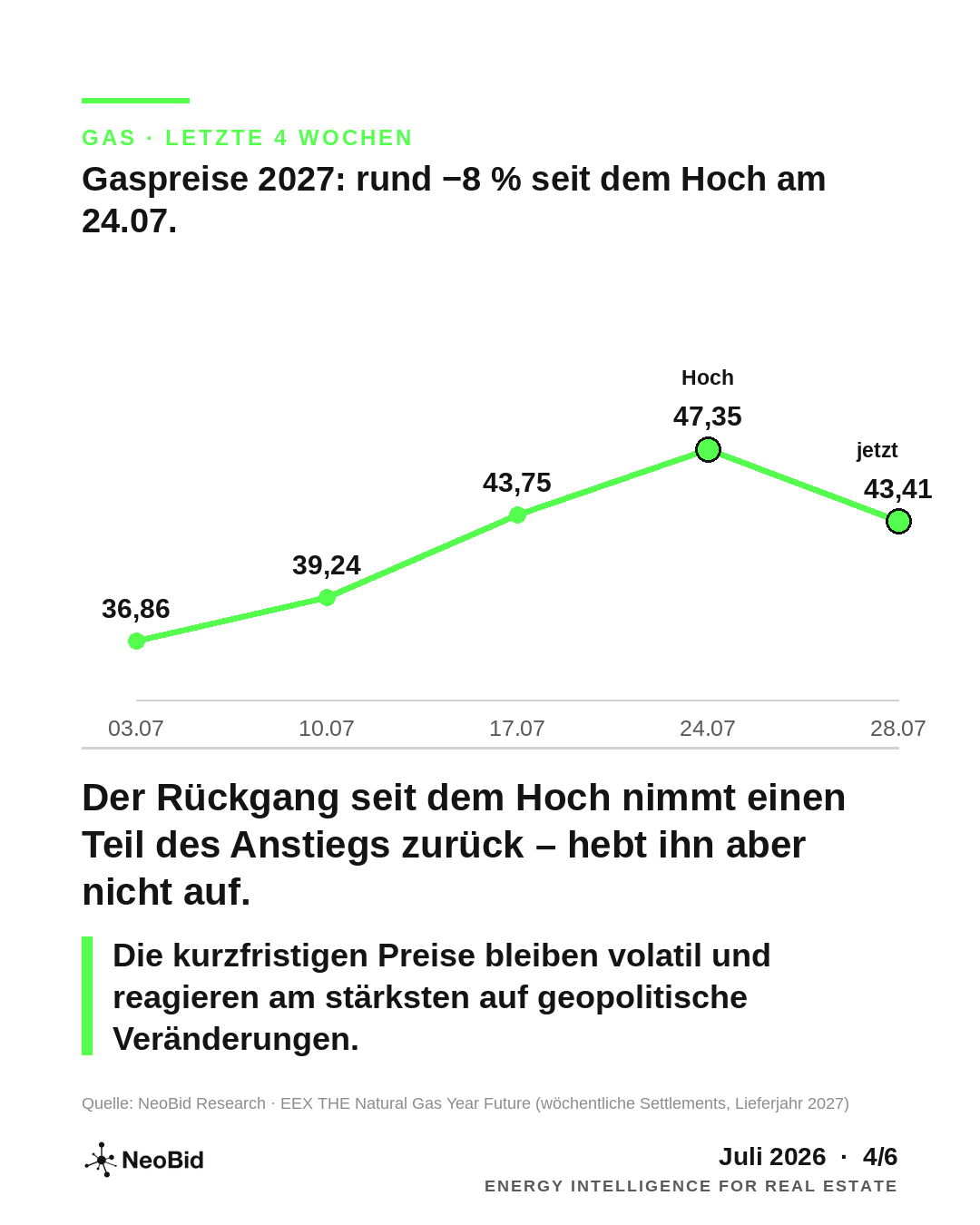
Gas for 2027 rose by around 28 per cent from the start of July to €47.35/MWh on 24 July. By 28 July, the price had fallen to €43.41/MWh, around eight per cent below the peak.
The decline reversed part of the previous rise. However, prices remained above their end-of-June level. This countermovement alone does not provide a reliable forecast of future developments.
Distinguish wholesale prices from supply offers
The figures quoted are wholesale benchmarks, not end-customer prices. Forward market prices are supplemented by costs including load profile and supplier costs, network charges, taxes and levies. For gas, CO₂ costs must also be considered.
The forward market price provides a reference point for comparing offers. Delivery periods, consumption profiles and contractual terms must be comparable. A complete comparison considers every price component.
Updated regulatory context: The European Commission now gives 2028 as the full launch date for the ETS2 emissions trading system . The earlier reference to “from 2027” has therefore been corrected. The applicable CO₂ cost rules are what matter for a specific supply offer.
Prepare the portfolio before the next market movement
The pullback is not a general recommendation to buy. For owners, asset managers and property managers, the question is whether data, deadlines and approvals enable a sound decision when an offer fits the procurement strategy.
Prepare the data: Provide complete, checked supply point, contract and consumption data .
Clarify deadlines: Coordinate notice periods, supply start dates and internal approvals.
Define the strategy: Set the procurement model, target values and risk limits before the tender.
Make offers comparable: Approach suitable suppliers with the same data and contractual requirements.
NeoBid combines market data, portfolio strategy and a structured data foundation for energy procurement for property portfolios. For more detail, see Myth #8 on procurement planning, which explains why expecting prices to fall is no substitute for a plan.
Data basis
Historical prices and percentages were taken from the original NeoBid market update using EEX settlement data from 28 July 2026. They describe the market at that time; the regulatory context on ETS2 has been updated using the linked EU source.
How ready is your portfolio for a 2027 tender?
Discuss with NeoBid which data, contractual deadlines and decisions should be prepared for your next tender.