From growing complexity to greater transparency
Volatile energy markets, extensive consumption data, regulatory requirements and sustainability objectives make portfolio energy procurement demanding. Owners, asset managers and property managers need a reliable basis for assessing offers, risks and options.
Digitalisation and AI can help by connecting data, simplifying recurring tasks and revealing relationships. What matters is the specific task an application solves and how its results are checked.
Why digital processes matter today
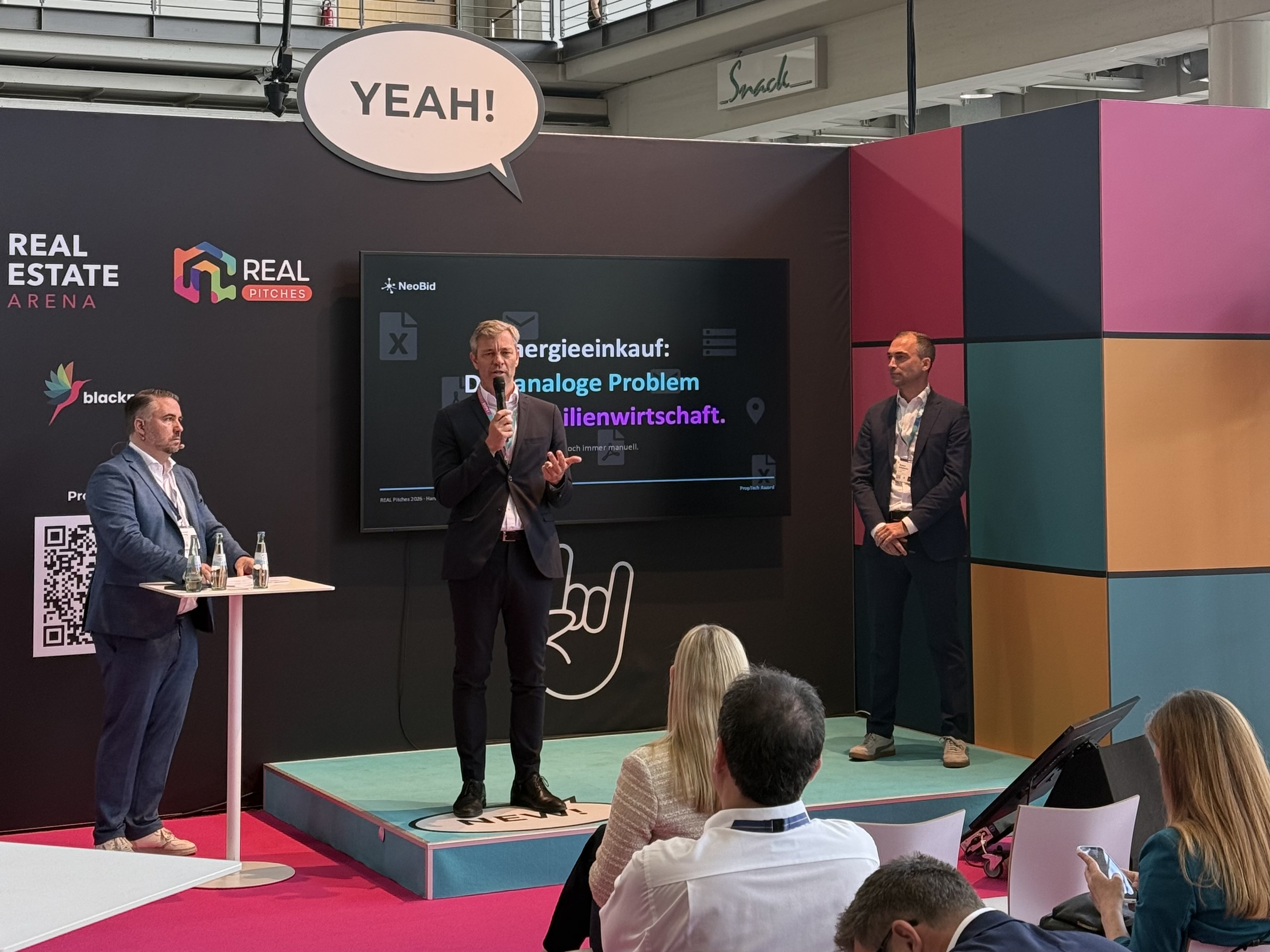
At Real Estate Arena 2026 in Hanover, recurring questions arose: how can available energy data be used effectively, and how can they support transparent procurement decisions? Discussions showed interest in digitalisation, AI and energy optimisation.
Digital platforms can combine consumption and contract data, support recurring checks and compare offers on a consistent basis. This facilitates collaboration between owners, asset management, property management and energy service providers.
Not every automation needs AI. Clear data structures, responsibilities and deadlines are useful in their own right. The necessary data requirements are explained in the article on metering and energy data.

Where AI can support analysis
AI can identify patterns in large datasets and support forecasting. The International Energy Agency’s “Energy and AI” report describes applications including forecasting and energy system optimisation. This does not guarantee lower purchasing prices for a specific property portfolio.
For procurement, results are only useful if the data basis, assumptions and uncertainties are transparent. A forecast supports a decision; it does not relieve those responsible of assessing the contract or defining acceptable risk.
What professional portfolios should clarify before use
Data quality: Are supply points, consumption periods and contract records complete, current and clearly assigned?
Verifiability: Can calculations and recommendations be traced to their source data and assumptions?
Responsibility: Who checks results, decides on deviations and approves a contract?
These questions help integrate digital tools into existing processes. Speed alone is not a measure of quality: a fast offer comparison remains unusable if volumes, durations or price components are not comparable.
From event insights to portfolio implementation
The discussions in Hanover showed a willingness to explore new ways of working. For implementation, start with a clearly defined process, such as preparing consumption data or comparing incoming offers. This makes it possible to assess whether a solution creates transparency and actually reduces workload.
NeoBid connects data preparation, market assessment and procurement processes for property portfolios. The overview of energy procurement in real estate explains the relationship. A conversation can establish which data and decision steps in your portfolio should be improved first.