Digital procurement in the trade fair context
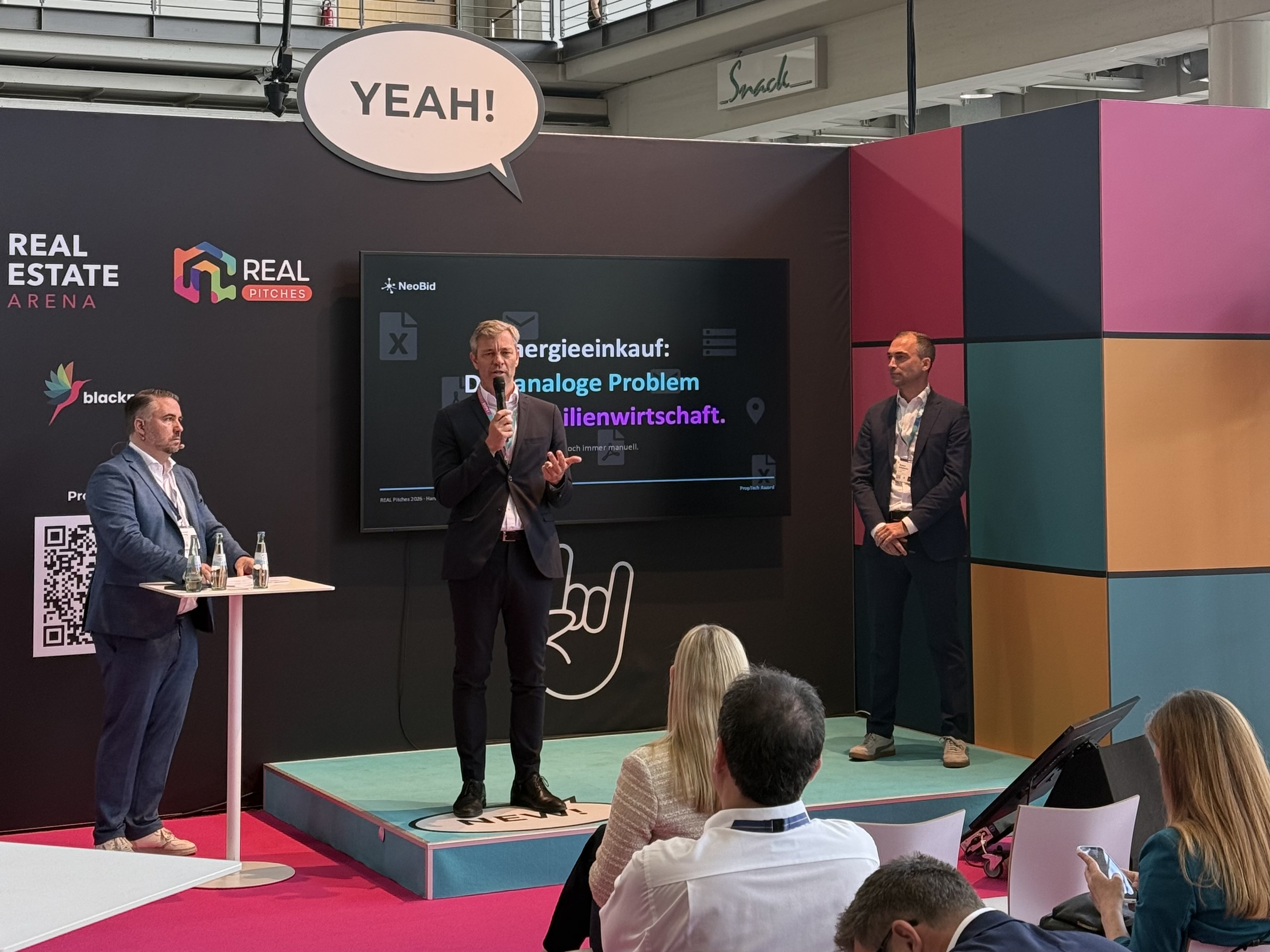
Real Estate Arena 2026 took place in Hanover on 10 and 11 June. It brought together professionals from real estate, construction, investment and technology. NeoBid also attended. This article focuses on how digital procurement processes can enable greater transparency and reliable collaboration.
Cost pressures, complex projects and sustainability requirements call for transparent decisions. For professional property portfolios, this applies both to selecting partners and service providers and to ongoing energy supply.
Procurement as part of portfolio management
Purchasing and tendering processes affect project costs, quality and reliability. In construction and development, unclear responsibilities or late decisions can cause delays. Energy procurement also involves consumption volumes, contractual deadlines, price components and allocation of market risks.
Procurement is therefore more than administrative order processing. Owners and asset managers define commercial objectives and risk limits; property managers and service providers supply the data and implement agreed processes. Shared information supports this collaboration.
What digital processes can deliver
Digital platforms can consolidate information, present offers comparably and document decisions. Structured processes facilitate communication and help identify missing information or outstanding approvals early.
For property portfolio energy supply, NeoBid focuses on these interfaces: data preparation, tendering and offer evaluation should work together. The article on energy procurement in real estate explains the process.
Whether a digital solution reduces effort or risks depends on how it is integrated into practice. Reliable data, clear responsibilities and usable interfaces remain essential. Technology alone does not create a lasting competitive advantage.
Collaboration between PropTechs and property companies
Real Estate Arena connects established market participants with technology companies. The organiser's review of the 2026 event describes the dialogue and the role of PropTechs. Such events provide opportunities to establish partnerships and assess solutions against specific requirements.
Three questions help when choosing an application:
Process: Which task should improve, and how will the improvement be measured?
Collaboration: Which participants need which information and approval rights?
Integration: How does the solution fit existing data, systems and sustainability requirements?
Procurement, project management and sustainability need to share information. This calls for coordinated interfaces and processes; it does not necessarily require every task to be handled in a single platform.
Turn trade fair discussions into concrete steps
The value of a trade fair contact becomes clear through subsequent collaboration. A defined use case helps assess a digital solution's effort and benefits within your portfolio. In energy procurement, this might be a better data foundation or a transparent comparison of offers.
Our perspective on Digitalisation and AI in energy procurement explores these questions. If you would like to develop your portfolio's processes, we can discuss the starting position and appropriate next steps.